TL;DR: Amazon package delivery issues need two responses: resolve the affected order and prevent the same problem from recurring. First confirm whether Amazon or the seller fulfilled the order, then compare the promised dates with verified tracking events. Keep buyer communication and claims inside the appropriate Amazon workflow. Use shipment records to investigate delivery performance and customer-feedback analysis to improve packaging, product information, and fulfillment decisions.
Key Takeaways
- Start with the fulfillment method. FBA and standard seller-fulfilled orders have different customer-service and returns workflows.
- A tracking status is evidence, not the entire explanation. Label creation, carrier acceptance, delivery confirmation, and buyer receipt are different events.
- Resolve the order before debating the root cause. A carrier investigation and an Amazon response deadline can run at the same time.
- Measure operational improvement directly. Shipment records and case rates show delivery performance; reviews and marketplace trends add context, not proof of where a parcel went.
Table of Contents
- Quick Answer: What Should Sellers Do First?
- FBA vs. FBM: Who Handles the Delivery Issue?
- How to Diagnose Common Amazon Package Delivery Issues
- Respond to Buyers Without Creating More Friction
- Handle Claims and Buy Shipping Protection Carefully
- Which Delivery Metrics Should Sellers Track?
- Turn Delivery Complaints Into Operational Improvements
- A Practical Delivery-Issue Workflow
- How SellerSprite Supports Prevention and Analysis
- Common Mistakes to Avoid
- The Bottom Line
- FAQs
- References
Scope: This guide covers Amazon US customer-order delivery issues from a seller-operations perspective. It is not an Amazon customer-service channel. Check the current order, program rules, and case deadlines in Seller Central; the diagnostic routines below are suggested practices, not additional Amazon requirements.
Quick Answer: What Should Sellers Do First?
Amazon package delivery issues include overdue orders, stalled tracking, delivered-but-not-received reports, undeliverable parcels, and damaged or incomplete arrivals. The first useful question is not simply "Where is the package?" It is "Who fulfilled this order, what was promised, and what evidence do we have now?"
Check the order ID and fulfillment method, the ship-by and delivery dates, the latest carrier event, and any open return or claim. Preserve the buyer's description separately from your explanation of the cause: "not received" is a report; "lost by the carrier" is a conclusion that still needs evidence.
One case, two workstreams: Give the customer a clear next step while the team investigates the shipment. Do not delay a required response simply because the carrier has not finished its investigation.
FBA vs. FBM: Who Handles the Delivery Issue?
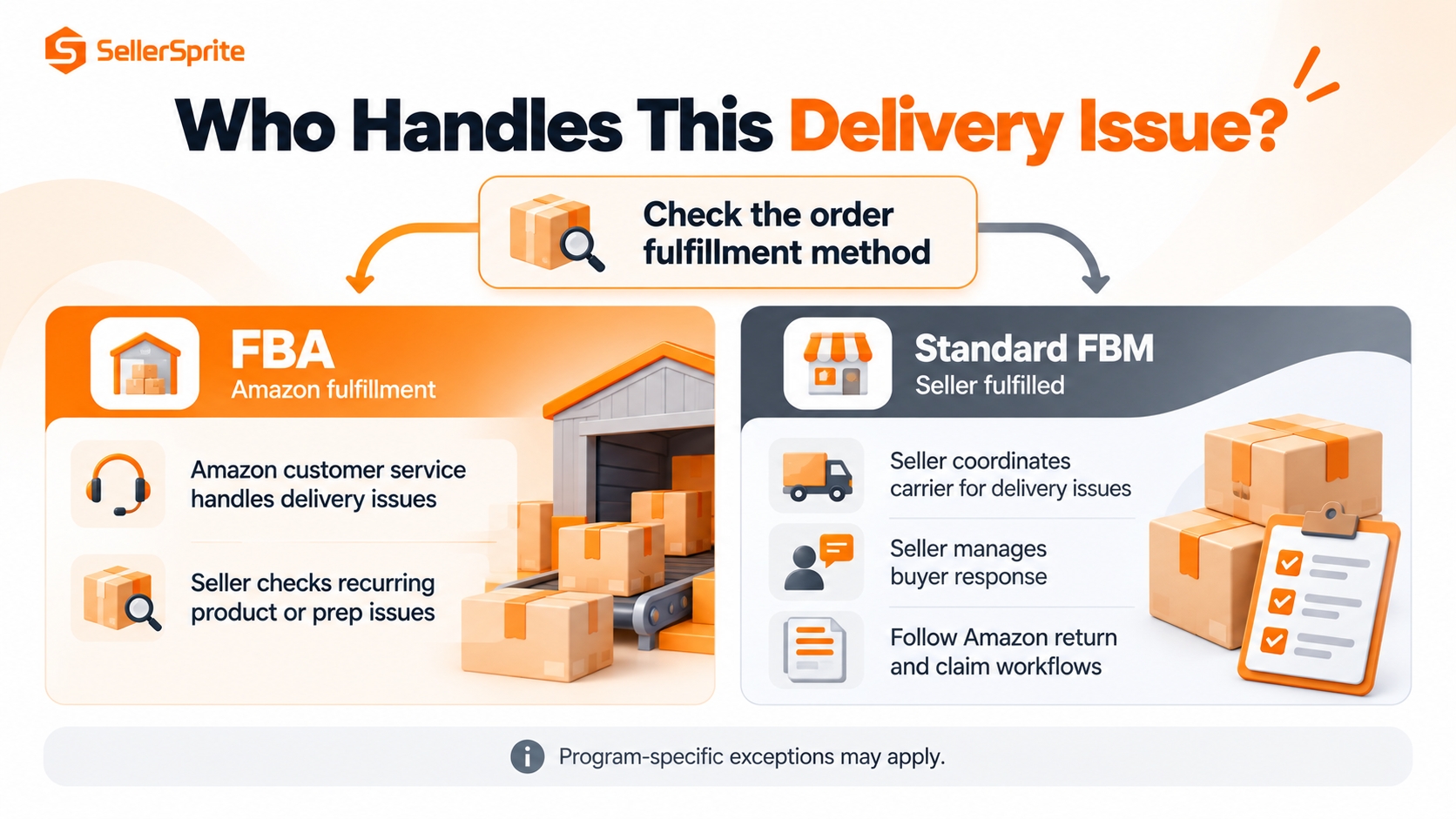
Identify fulfillment at the order level, not just by the brand name on the listing. The same seller can use more than one fulfillment method, and some seller-fulfilled programs include Amazon-managed customer service.
FBA Orders: Amazon Handles Fulfillment and Customer Service
With Fulfillment by Amazon (FBA), Amazon handles fulfillment, customer service, and the customer-return process. Direct order-specific delivery and refund questions into the Amazon support options associated with that order, while checking your seller reports for the resulting return, refund, or inventory record.
The seller still has work to do when repeated complaints point to product preparation, packaging, labeling, or inaccurate listing information. A customer refund and a seller reimbursement are separate events; investigate the applicable reimbursement policy rather than assuming every refund will be reimbursed.
FBM Orders: Manage the Shipping and Resolution Workflow
For standard Fulfilled by Merchant (FBM) orders, coordinate your warehouse or logistics provider, carrier investigation, buyer response, and return or refund handling. Amazon can automatically authorize eligible seller-fulfilled returns, so review the actual Manage Returns status before duplicating an action.
Check any program-specific arrangement first. Customer Service by Amazon and Seller Fulfilled Prime can change who handles customer service and the associated reimbursement route; buying a shipping label alone does not turn an FBM order into FBA.
Keep inbound shipments to fulfillment centers separate from customer parcels. For that upstream task, SellerSprite's guide to planning FBA shipping and fulfillment covers the shipping-plan workflow; an inbound receiving issue belongs in a different investigation from a buyer's missing order.
How to Diagnose Common Amazon Package Delivery Issues
Start with the observed event, then choose the investigation. These five scenarios need different checks, even when the buyer describes each one as "my Amazon package did not arrive."
1. The Order Is Late or Still Shows Label Created
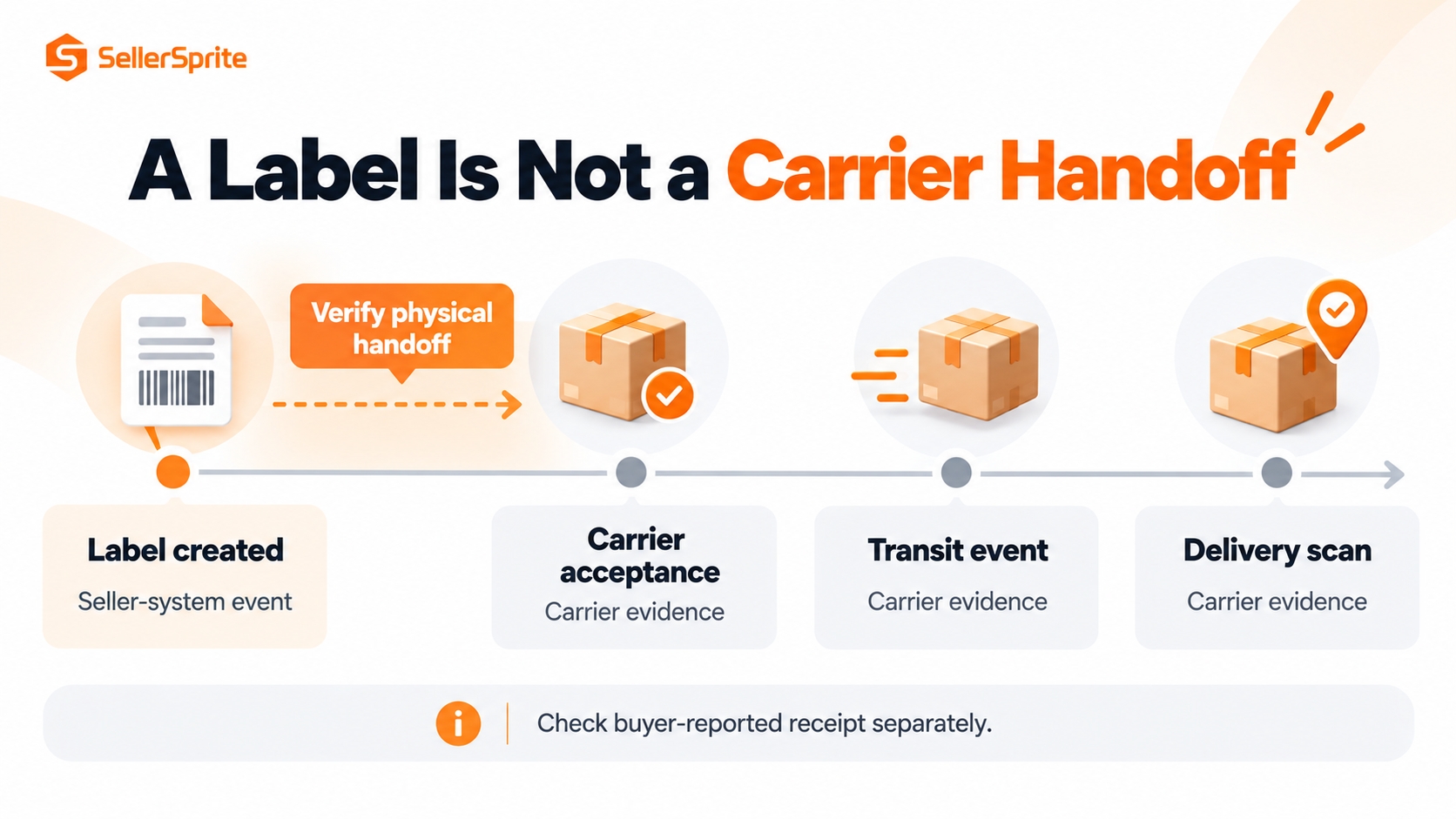
Compare the promised ship date with the warehouse handoff record and first carrier scan. A generated label or shipment confirmation is not, by itself, evidence of carrier possession. Amazon's late-shipment guidance says to confirm shipment when handing the package to the carrier, not simply to make an overdue order appear shipped.
Verify the carrier name, service, and tracking ID against the actual label. If the package is still at the warehouse, correct the dispatch problem; if it was handed over, investigate the missing acceptance evidence rather than changing the tracking record without a factual basis.
2. The Package Shipped, but Tracking Stopped Updating
Record the last verified scan and compare it with the promised delivery date. An interval without updates is not enough to distinguish an unscanned movement, service disruption, or lost parcel. For FBM, request a carrier trace through your shipping provider and give the case an owner and next review time.
Do not invent an arrival date to reassure the buyer. Communicate what is known, what you are checking, and what resolution step applies if the shipment cannot be completed. An open carrier trace does not suspend Amazon messaging or claim deadlines.
3. Tracking Says Delivered, but the Buyer Cannot Find the Package
Ask the buyer to verify the address in Your Orders, review any delivery photo or instructions, and check whether a household member or designated receiving location accepted the parcel. Amazon's missing-package guidance also notes that a delivery scan can precede arrival and includes a 48-hour waiting step.
That buyer-facing waiting step is not a reason for the seller to remain silent for 48 hours. Respond on time and follow the applicable order workflow. Do not automatically reject the report solely because tracking says delivered, or assume the buyer is dishonest.
4. The Package Is Undeliverable or Returning to Sender
Check the stated exception: inaccessible or incomplete address, unreadable label, transit damage, or refusal can lead to an undeliverable shipment. Amazon's customer guidance distinguishes Amazon-shipped packages from seller-shipped orders, so do not apply one redelivery or refund promise to every case.
Review whether a return or refund is already underway before taking another action. Confirm the appropriate order-resolution route rather than promising the same parcel can be redirected or resent to a different address.
5. The Package Arrived Damaged or With Items Missing
First check whether the order has separate packages and whether the reported missing item belongs to the purchased variation or pack count. Then distinguish transit damage, a packing omission, a product defect, and a mismatch between the listing and what was included.
Use the applicable return or replacement workflow. Request only relevant information needed to resolve the issue, and do not add evidence demands that conflict with Amazon's requirements. For repeated incidents, compare packing records, packaging versions, and product batches instead of blaming every damaged arrival on the carrier.
Respond to Buyers Without Creating More Friction
A useful reply acknowledges the issue, states verified facts, and explains the next action. Amazon's communication policy expects a response to buyer messages within 24 hours and requires communication through Buyer-Seller Messaging.
Use order-related language rather than a sales pitch. Do not attach review requests, promotional links, or conditions that connect a refund or replacement with changing feedback. Necessary case communication is different from sending extra unsolicited order or shipping confirmations.
Adaptable reply for an active FBM delivery inquiry
I'm sorry your order has not arrived as expected. The latest verified tracking update is [status and date]. We are [specific action you are authorized to take]. Please check [one relevant delivery detail, if needed]. I will update you by [a date and time you can meet] with the next step.
Replace the brackets with confirmed information. Do not promise a refund, replacement, or delivery date before checking the order and applicable process.
Maintain a case record containing the order and shipment identifiers, promised dates, tracking events, buyer report, actions, owner, and next deadline. Keep personal information in authorized systems; do not paste customer addresses, contact details, or order histories into public research tools.
Handle Claims and Buy Shipping Protection Carefully
Customer resolution, a carrier claim, and an Amazon claim are separate processes. Their deadlines and evidence requirements can overlap, so check each one rather than waiting for one investigation to finish before responding to another.
A-to-z Claims: Read the Case Deadline
Under the standard delivery-related A-to-z process, an unresolved issue can become claim-eligible after 48 hours from the buyer's first message and three days after the maximum estimated delivery date. Amazon also describes situations with different or automatic outcomes, so this is not a universal waiting rule.
If Amazon requests additional information during a claim investigation, its guidance specifies a 72-hour response window. Use the actual case notice and deadline, preserve relevant tracking and message evidence, and do not assume a delivered scan guarantees a favorable decision.
Buy Shipping: Protection Has Conditions
Review Amazon's Buy Shipping protection requirements for the shipment. For eligible package-not-received claims, the documented conditions include a qualifying Claims Protected service, timely shipment based on the first carrier scan, and the applicable Amazon reimbursement process. A label marked Late Delivery Risk is not equivalent protection.
Continue responding to the buyer and to Amazon. On-time delivery rate protection is a separate benefit with its own shipping-service and automation requirements; do not assume that Claims Protection and OTDR Protection are interchangeable.
Which Delivery Metrics Should Sellers Track?
Separate Amazon's official performance metrics from your internal problem-solving measures. The figures below summarize several US policies; use the account report for eligibility, exclusions, measurement windows, and program-specific requirements.
| Metric | What it measures | Published requirement and scope |
|---|---|---|
| On-time delivery rate (OTDR) | Whether eligible tracked seller-fulfilled shipments meet the promised delivery date. | At least 90% without promise extensions for the US seller-fulfilled policy. |
| Valid tracking rate (VTR) | The share of eligible seller-fulfilled packages with valid tracking. | At least 95% at product-category level; exemptions and additional program requirements apply. |
| Late shipment rate (LSR) | Orders without shipment confirmation by the expected ship date. | Below 4% for seller-fulfilled orders; not the same as late delivery. |
| Order defect rate (ODR) | Orders with applicable negative feedback, A-to-z claims, or chargebacks. | Below 1% under the relevant policy; not an average product-review score. |
FBA orders are not subject to the seller-fulfilled OTDR requirement. Do not mix FBA and FBM shipment records to recreate that metric, and do not treat an internal contact-rate calculation as an official Amazon score.
Measure Repeat Problems Using Comparable Shipment Groups
For internal analysis, group shipments by dispatch period, fulfillment method, carrier service, product, and packaging version. Count unique affected orders rather than counting every message from the same customer as a new failure.
Internal delivery-issue contact rate = unique orders in a shipment group with a reported delivery issue ÷ total shipped orders in that same group × 100
Hypothetical example: 12 affected orders out of 600 is 2%; 18 out of 1,200 is 1.5%. The second group has more cases but a lower reported rate. Allow comparable time for issues to emerge and resolve before comparing groups; recent shipments can make performance look artificially better.
Also record unresolved-case age, time to first response, damage or missing-part themes, and the net cost of each resolution after any reimbursement. A refund total is not a complete cost model, and a change in BSR is not proof that delivery performance improved.
Turn Delivery Complaints Into Operational Improvements
Use the evidence to select the part of the experience that needs changing. The following are operational checks to consider, not standardized tests or guarantees of fewer claims.
Fix Dispatch and Delivery-Promise Mismatches
Compare promised handling times with actual warehouse cutoffs, carrier pickups, and service performance. Correct the relevant shipping configuration rather than inserting static delivery promises into listing copy; keep stock allocated across channels so the team does not discover a shortage after accepting the order.
Test Packaging Against the Failure You Observed
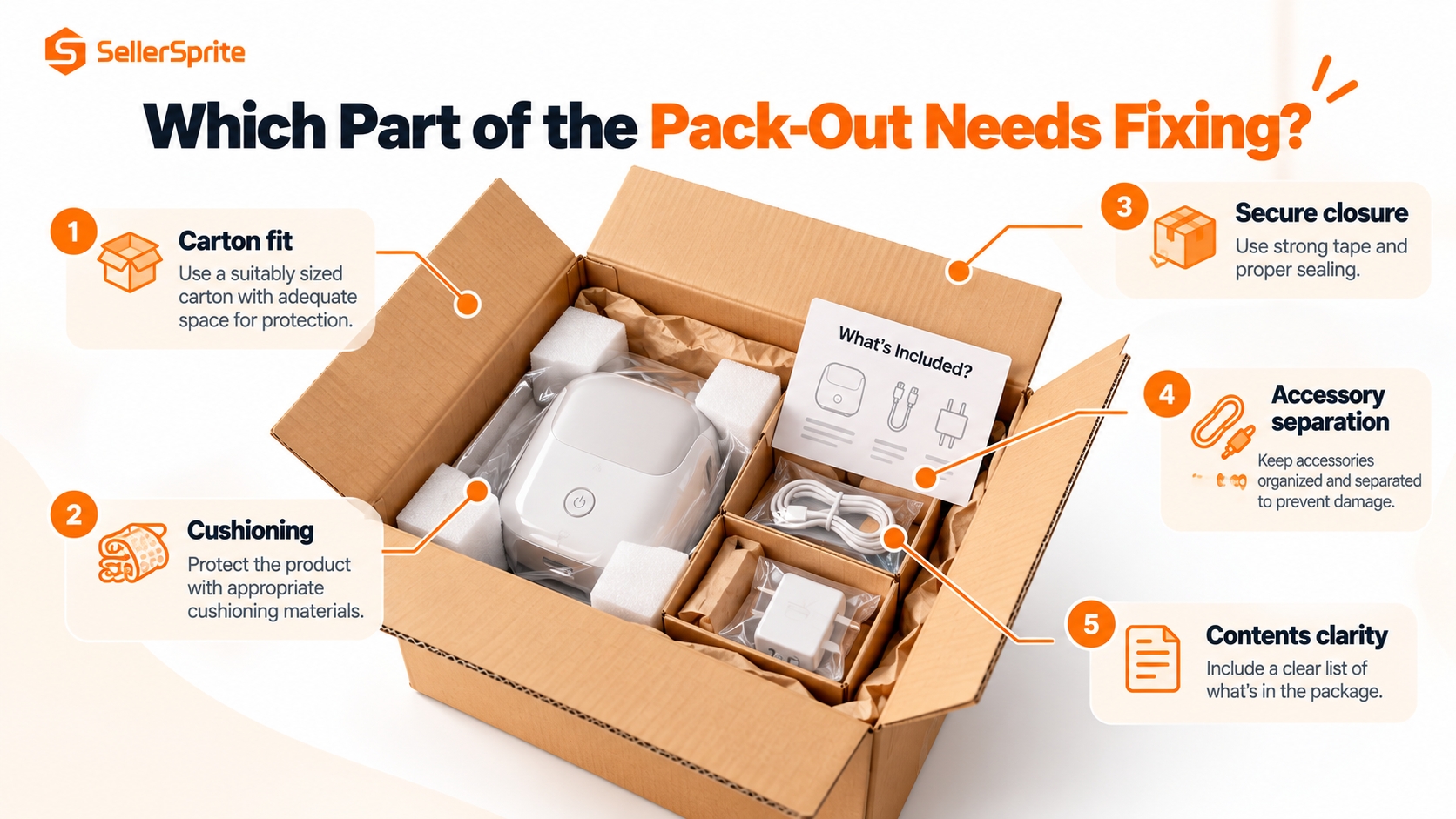
Repeated corner damage calls for a different investigation from leaking contents or missing accessories. Compare carton fit, cushioning, closures, internal part separation, and packing instructions, then test a documented change on a defined batch. Check the applicable product and FBA preparation requirements before changing a pack-out.
Clarify What the Buyer Will Receive
Make variation, dimensions, quantity, included accessories, and assembly requirements clear. A "missing item" complaint may be a packing error or an expectation created by a lifestyle image; inspect both possibilities before rewriting the listing or changing the warehouse process.
Keep customer support separate from review collection. SellerSprite's guide to using Amazon reviews responsibly provides related guidance on learning from buyer feedback without turning a resolution into a request for favorable reviews.
A Practical Delivery-Issue Workflow
A repeatable workflow connects the live order to the next improvement decision. Keep a clear boundary between the customer case and the broader research project.
- Classify the order. Confirm FBA or FBM, program-specific support arrangements, and the exact customer-reported issue.
- Build the evidence trail. Record promised dates, verified carrier events, packing information where available, and the current return or claim status.
- Assign the next action. Name the responsible person, response deadline, and authorized resolution route. Keep the customer informed.
- Group closed and recurring cases. Look for concentrations by product, batch, carrier service, fulfillment site, and packaging version.
- Test one targeted improvement. Document the change and compare equivalent shipment groups after sufficient follow-up. Check whether a similar issue recurs before scaling the change.
Review urgent cases as their deadlines require, then use a recurring operational review to select improvements. This suggested routine is not an Amazon-mandated weekly schedule, and it should not replace monitoring active messages or claims.
How SellerSprite Supports Prevention and Analysis
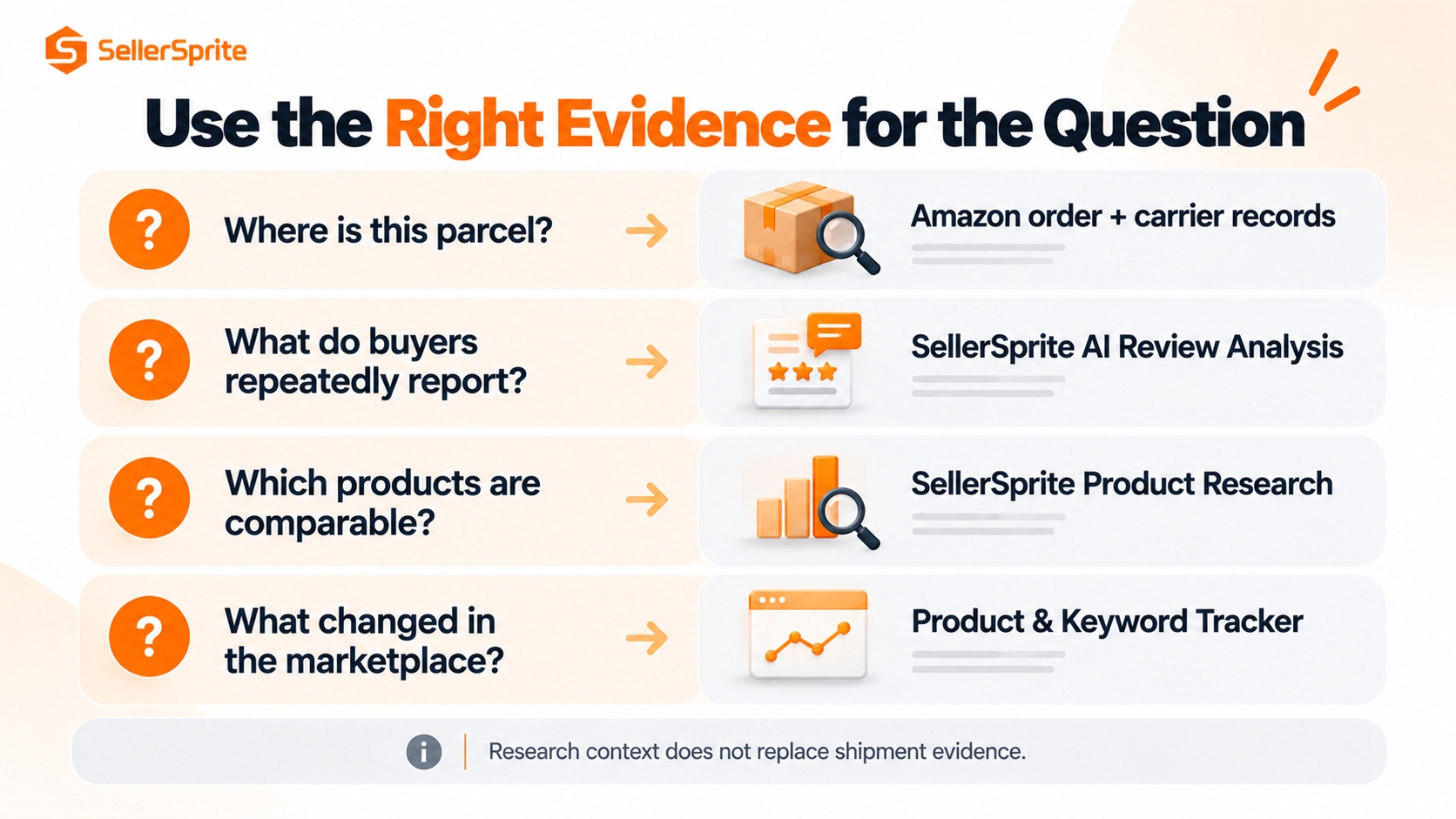
SellerSprite supports the research side of this workflow, not parcel recovery. Use Amazon order records and carrier evidence for the live case, then use SellerSprite to examine product feedback and marketplace context.
AI Review Analysis: Identify Product and Packaging Themes
Use AI Review Analysis to organize available review content around strengths, weaknesses, customer expectations, and pain points. For this topic, investigate recurring mentions of damaged arrivals, missing accessories, confusing quantities, or packaging problems, then verify the original comments and your own operational evidence.
Review samples do not contain every shipment or every complaint. A theme in reviews is a lead for investigation, not a verified carrier failure rate, and an AI summary does not establish which party caused the problem.
Product Research: Compare Relevant Products, Not Random Complaints
Use Product Research to build a comparable product set by category and supported product filters before reviewing competitors' feedback. This helps avoid applying a fragile multipack's packaging complaints to a product with a very different configuration. Historical market data supports the research context; it does not reveal competitors' private delivery records.
Product & Keyword Tracker: Monitor Marketplace Context
After a packaging or listing update, Product & Keyword Tracker can add supported observations such as price, ratings, BSR, and keyword positions to your timeline. Evaluate those observations alongside your delivery-issue rate and case records, rather than attributing every marketplace change to the operational fix.
Keep the tools in their proper roles: SellerSprite does not locate parcels, read carrier GPS records, decide refund eligibility, file your delivery claim in this workflow, or guarantee that a shipment problem will be resolved.
Common Mistakes to Avoid
The most damaging mistakes blur the difference between a record, a customer report, and a conclusion. Use these checks before closing a case or declaring that an operational change worked.
- Confusing shipment confirmation with carrier acceptance. Preserve both timestamps instead of treating them as one event.
- Requiring the buyer to wait while every investigation finishes. Follow the applicable resolution and claim deadlines even when a carrier trace remains open.
- Using product ratings as a delivery metric. Product reviews, seller feedback, and Amazon shipping-performance reports are different records.
- Scaling promotions during an unresolved fulfillment bottleneck. Review whether inventory and dispatch capacity can support additional Sponsored Products traffic before increasing spend.
- Offering support in exchange for a review change. Resolve the order without tying refunds, replacements, or assistance to feedback.
The Bottom Line
Amazon package delivery issues become more manageable when the team separates ownership, evidence, resolution, and prevention. Start with the order and its fulfillment method, meet the relevant response deadline, and use the right records to investigate what happened.
For longer-term improvement, connect recurring complaints to specific changes in dispatch, packaging, product information, or inventory planning. Measure the outcome with comparable shipment data; use SellerSprite to add customer and market context, not to replace the operational evidence.
FAQs
What should a seller do first when an Amazon package is late?
Confirm who fulfilled the order, compare the ship-by and promised delivery dates with tracking evidence, and check for an open return or claim. Give the buyer a clear next step while the responsible team investigates.
Who handles delivery complaints for FBA orders?
Amazon handles FBA fulfillment, customer service, and customer returns. Sellers should still review their own reports and investigate recurring product-preparation or packaging issues; a customer refund does not automatically establish seller reimbursement eligibility.
What if tracking says delivered but the buyer has not received the package?
Check the recorded delivery details and ask the buyer to review the address, delivery photo, receiving location, and household receipt. Follow the appropriate missing-package process rather than automatically rejecting the report.
Should sellers wait 48 hours before replying to a missing-package message?
No. Amazon's communication policy expects responses within 24 hours. The 48-hour waiting step in buyer-facing missing-package guidance and the timing of certain A-to-z claims are separate matters, not permission to delay a reply.
Does Amazon Buy Shipping protect every delivery claim?
No. Protection depends on the service and the order meeting the applicable requirements, including timely carrier acceptance. Claims Protection and OTDR Protection have different conditions; inspect the shipment and current policy rather than assuming every label qualifies.
Is late shipment the same as late delivery?
No. Late shipment rate concerns shipment confirmation against the expected ship date. On-time delivery rate concerns delivery against the relevant promised date. Valid tracking rate measures a different requirement again.
How can sellers reduce damaged or incomplete deliveries?
Group incidents by product, packaging version, batch, and fulfillment process. Check carton fit, closures, internal protection, accessory packing, and listing clarity, then test a specific change and compare equivalent shipment groups.
Can SellerSprite track a missing Amazon parcel?
Not in this workflow. Use Amazon and carrier records for individual shipment investigations. SellerSprite AI Review Analysis supports feedback research, while Product Research and Product & Keyword Tracker provide product and marketplace context.
References
- Amazon Seller Central: FBA Customer Returns Policy View
- Amazon: Managing Customer Returns for Seller-Fulfilled Orders View
- Amazon Customer Service: Find a Missing Package That Shows as Delivered View
- Amazon Seller Central: Communication Program Policy View
- Amazon Seller Central: A-to-z Guarantee Claims View
- Amazon Seller Central: Amazon Buy Shipping Protections View
- Amazon Seller Central: On-Time Delivery Rate View
- Amazon Seller Central: Valid Tracking Rate View
- Amazon Seller Central: Late Shipment Rate View
- Amazon Seller Central: Order Defect Rate View
- Amazon Customer Service: Undeliverable Packages View
- SellerSprite: Amazon Reviews Guide for Sellers View
- SellerSprite: Review Analysis Guide View
- SellerSprite: Product & Keyword Tracker Guide View
- SellerSprite: Product Research Quick Tips View
- SellerSprite: Streamlining Your FBA Shipping and Fulfillment View
By SellerSprite Content Team
SellerSprite publishes practical guidance on Amazon marketplace research and seller operations. This guide draws on official Amazon documentation and clearly labeled examples for delivery investigation and prevention.
Last reviewed: October 14, 2026