TL;DR: Keyword volatility measures how frequently Amazon search terms change in ranking, making it critical for sellers to monitor and adapt. Understanding volatility helps improve visibility, reduce ad spend waste, and boost conversions through smarter keyword optimization.
Key Takeaways
- Keyword volatility refers to how frequently a search term’s ranking changes on Amazon, influenced by competition, seasonality, and algorithm updates.
- High-volatility keywords often indicate intense competition or seasonal demand spikes, requiring more frequent monitoring and optimization.
- Using advanced keyword tracking tools like SellerSprite helps detect ranking shifts in real time and adjust strategies proactively.
- Integrating keyword volatility insights into your PPC campaigns reduces wasted ad spend and improves ROI by targeting stable, high-converting terms.
- Regularly updating product titles, bullet points, and backend keywords based on volatility trends keeps your listings competitive and visible.
Table of Contents
Note on marketplaces: This guide is specifically optimized for the US market.
What Is Keyword Volatility?
Keyword volatility on Amazon refers to the frequency and magnitude with which a keyword's search ranking changes over time. Unlike static search engines where rankings may stabilize for weeks, Amazon’s A9 and A10 algorithms constantly re-evaluate product relevance, sales velocity, customer behavior, and competition—leading to daily or even hourly fluctuations in keyword positions.
For example, a product ranked #3 for "organic dog treats" today might drop to #15 tomorrow without any changes to its listing. This isn’t necessarily due to poor performance—it could be triggered by a competitor launching a promotion, an influx of new reviews, or seasonal demand surges.
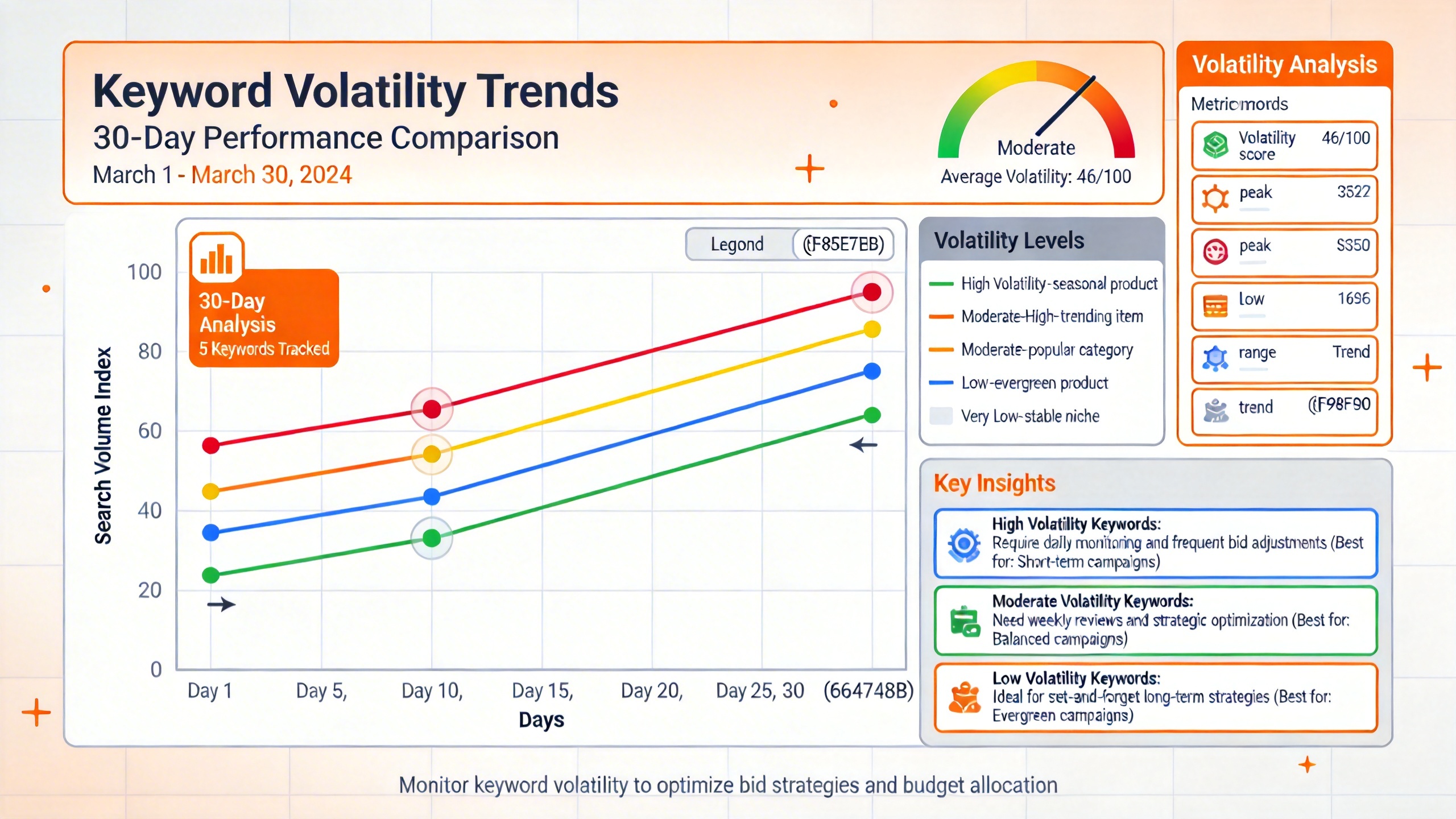
Understanding keyword volatility is essential because it directly impacts your product visibility, click-through rates (CTR), and ultimately, sales. High-volatility keywords are often highly competitive or tied to trending products, while low-volatility keywords tend to be more stable and predictable.
Why Does Keyword Volatility Matter for Amazon Sellers?
Ignoring keyword volatility can cost you sales, ad budget, and long-term brand equity. Here’s why it matters across different aspects of your Amazon business:
1. Impacts Organic Visibility and Sales
Amazon shoppers rarely go beyond the first page of search results. If your keyword ranking fluctuates wildly, your product may appear on page one one day and disappear the next. This inconsistency leads to unpredictable traffic and lost conversion opportunities.
2. Affects PPC Campaign Performance
In Amazon Sponsored Products, you bid on keywords to drive traffic. If a keyword is highly volatile, your ad position can shift dramatically, leading to inconsistent impressions and higher cost-per-click (CPC). Without monitoring volatility, you risk overspending on unstable keywords that don’t convert reliably.
3. Influences Product Listing Optimization
Volatility signals changing consumer intent or competitive dynamics. For instance, if "wireless earbuds with noise cancellation" suddenly becomes more volatile in Q4, it might indicate increased competition ahead of Black Friday. Smart sellers use this signal to refresh their titles, bullet points, and backend keywords before peak season.
4. Helps Identify Emerging Trends
Sudden spikes in volatility can reveal emerging trends. For example, a normally stable keyword like "reusable water bottles" might become volatile during summer months or after a viral TikTok trend. Early detection allows you to capitalize on demand before competitors catch on.
What Causes Amazon Keyword Ranking Fluctuations?
To manage keyword volatility effectively, you must understand what drives it. Amazon’s ranking algorithm considers hundreds of factors, but the following are the most common causes of ranking instability:
1. Competitive Activity
When competitors run promotions, increase advertising bids, or improve their listings (e.g., better images, more reviews), their products gain momentum and push yours down. This is especially true in saturated categories like supplements, skincare, or electronics.
2. Seasonal Demand Shifts
Seasonal keyword trends significantly impact volatility. For example, "Christmas decorations" sees massive ranking swings from October to December, while "sunscreen" peaks in spring and summer. These shifts reflect both increased search volume and heightened competition.
3. Algorithm Updates
Amazon frequently tweaks its search algorithm to improve relevance and customer experience. While not all updates are publicized, they can cause sudden ranking changes. For instance, a recent update prioritizing products with faster shipping times may have boosted FBA listings over merchant-fulfilled ones.
4. Sales Velocity and Conversion Rates
Amazon rewards products that convert well. If your conversion rate drops due to negative reviews, pricing issues, or stockouts, your ranking will likely suffer—even if your keyword relevance remains strong.
5. Review Velocity and Sentiment
A sudden influx of 5-star reviews can boost your ranking, while a cluster of 1-star reviews—even just two or three—can trigger a sharp decline. Amazon’s algorithm interprets review patterns as signals of product quality and customer satisfaction.
6. Inventory and Fulfillment Status
Running out of stock or switching from FBA to MFN can hurt your visibility. Amazon favors products that are reliably available and have fast shipping. Even temporary stockouts can lead to lasting ranking penalties.
How to Measure Keyword Volatility: Tools & Metrics
You can’t manage what you can’t measure. To track keyword volatility effectively, you need the right tools and metrics. Here’s how to do it:
1. Use Dedicated Keyword Tracking Tools
Generic rank trackers aren’t enough. You need a tool built specifically for Amazon, such as SellerSprite’s Amazon Rank Tracker, which provides:
- Daily ranking updates across multiple geolocations
- Volatility scoring (low, medium, high) based on historical fluctuations
- Competitor benchmarking and share-of-voice analysis
- Integration with PPC performance data
These features allow you to spot trends early and respond proactively.
2. Calculate Volatility Manually (Basic Method)
If you’re not using a tool, you can estimate volatility by tracking a keyword’s rank over 30 days:
- Record your product’s rank for a target keyword every day.
- Calculate the average rank.
- Find the standard deviation of daily ranks.
- Higher standard deviation = higher volatility.
While time-consuming, this method gives you a basic understanding of instability.
3. Leverage Keyword Difficulty Score
Many tools, including SellerSprite, provide a keyword difficulty score—a composite metric that estimates how hard it is to rank for a term. Great difficulty often correlates with high volatility because more sellers are competing aggressively.
Use this score to prioritize keywords. For example:
- Low difficulty, low volatility: Ideal for long-term organic growth.
- High difficulty, high volatility: Best for short-term campaigns or aggressive PPC bidding.
- Low difficulty, high volatility: Investigate—could be an emerging trend or data anomaly.
4. Monitor Seasonal Keyword Trends
Seasonality is a major driver of volatility. Use historical data to identify recurring patterns. For example, if "pool floats" consistently spike in volatility every May, plan your inventory, ads, and content updates in April.
5 Proven Strategies to Manage Keyword Volatility
Now that you understand what keyword volatility is and how to measure it, here are five actionable strategies to stay ahead of the curve:
1. Prioritize Low-Volatility Keywords for Organic Growth
Focus your SEO efforts on stable, low-volatility keywords with solid search volume. These terms offer predictable traffic and are easier to rank for the long term. Use tools to filter keywords by volatility score and build a “core keyword portfolio” for each product.
For example, instead of targeting the volatile “best protein powder 2024,” go for “grass-fed whey protein” if it has lower volatility and consistent demand.
2. Optimize Listings Based on Real-Time Volatility Data
Update your product titles, bullet points, and backend search terms whenever you detect significant volatility shifts. For instance:
- Add trending features (e.g., “vegan,” “gluten-free”) if they’re gaining traction.
- Incorporate high-converting phrases from top-ranking competitors.
- Remove underperforming keywords that no longer drive traffic.
Use a keyword mapping template to organize your optimizations systematically.
3. Adjust PPC Bidding Based on Volatility
In Amazon Advertising, avoid bidding aggressively on high-volatility keywords unless you’re running a short-term campaign. Instead:
- Use automated bidding strategies (e.g., Dynamic Bids – Down) to reduce spend when rankings drop.
- Pause or lower bids on keywords with erratic performance.
- Allocate more budget to stable, high-converting keywords.
This approach improves your Advertising Cost of Sale (ACoS) and protects your ad ROI.
4. Monitor Competitors During High-Volatility Periods
When a keyword becomes volatile, check what your top competitors are doing. Are they running lightning deals? Launching new variations? Getting influencer reviews?
Use competitive intelligence tools to reverse-engineer their strategies and respond accordingly—whether that means matching a promotion or improving your listing’s content.
5. Build a Responsive Optimization Schedule
Don’t wait for sales to drop before acting. Establish a regular review cadence:
- Daily: Check ranking alerts for high-priority keywords.
- Weekly: Review volatility reports and update PPC campaigns.
- Monthly: Refresh product content and expand keyword portfolios.
- Quarterly: Audit all listings and re-evaluate category positioning.
This proactive rhythm keeps your brand agile and competitive.
FAQ
How does keyword volatility affect my Amazon product rankings?
Keyword volatility directly impacts your product rankings by causing frequent fluctuations in search position. High volatility means your product may appear on page one one day and drop off the next, leading to inconsistent visibility and lost sales. It’s often driven by competitive activity, seasonal trends, or algorithm updates. Monitoring volatility helps you respond quickly to ranking changes and maintain consistent exposure.
What tools can I use to monitor keyword volatility on Amazon?
You can use specialized keyword tracking tools like SellerSprite to monitor keyword volatility. These tools provide daily rank updates, volatility scoring, competitor analysis, and historical trend data. SellerSprite also integrates with PPC data, allowing you to correlate ranking changes with ad performance. Manual tracking is possible but inefficient for multiple keywords or large catalogs.
How often should I update my Amazon listings based on keyword volatility changes?
You should review your listings at least weekly if you’re targeting high-volatility keywords. For stable keywords, a monthly refresh is usually sufficient. However, set up real-time alerts for critical keywords so you can act immediately if a major shift occurs. Regular updates to titles, bullet points, and backend keywords help maintain relevance and improve long-term ranking stability.
Next Steps
- Start tracking your top keywords with SellerSprite’s free rank tracker to identify volatility patterns.
- Download our free keyword mapping template to organize and optimize your keyword strategy.
References
- Amazon A10 Algorithm Overview View
- Complete Guide to Amazon Rank Tracking View
- Keyword Mapping Best Practices View
By SellerSprite Success Team
The SellerSprite Success Team combines deep expertise in Amazon marketplace dynamics, data analytics, and e-commerce growth strategies. With years of hands-on experience helping thousands of sellers—from beginners to enterprise brands—optimize their listings, manage PPC campaigns, and scale profitably, we deliver actionable insights grounded in real-world performance data. Our content is trusted by Amazon sellers across the US, EU, and APAC regions.