TL;DR: Finding profitable Amazon Merch on Demand niches isn't about luck; it's about applying a repeatable research process that balances buyer demand, competition depth, and design efficiency. This guide walks you through every step, from spotting viable niche signals to avoiding common pitfalls, with actionable workflows for the SellerSprite toolset.
Key Takeaways
- A good Amazon Merch niche has a clear buyer identity, repeatable design angles, and sustained demand, not just low competition.
- Always validate five data points before designing: search volume, competitor count, review depth, price ceiling, and trend direction.
- Use SellerSprite's Product Research, Keyword Research, and Chrome Extension tools together to move from broad signals to a validated shortlist in under 30 minutes.
Table of Contents
Note on marketplaces: This guide is specifically optimized for the US market, but the research principles apply to all Amazon Merch regions.
Quick Answer
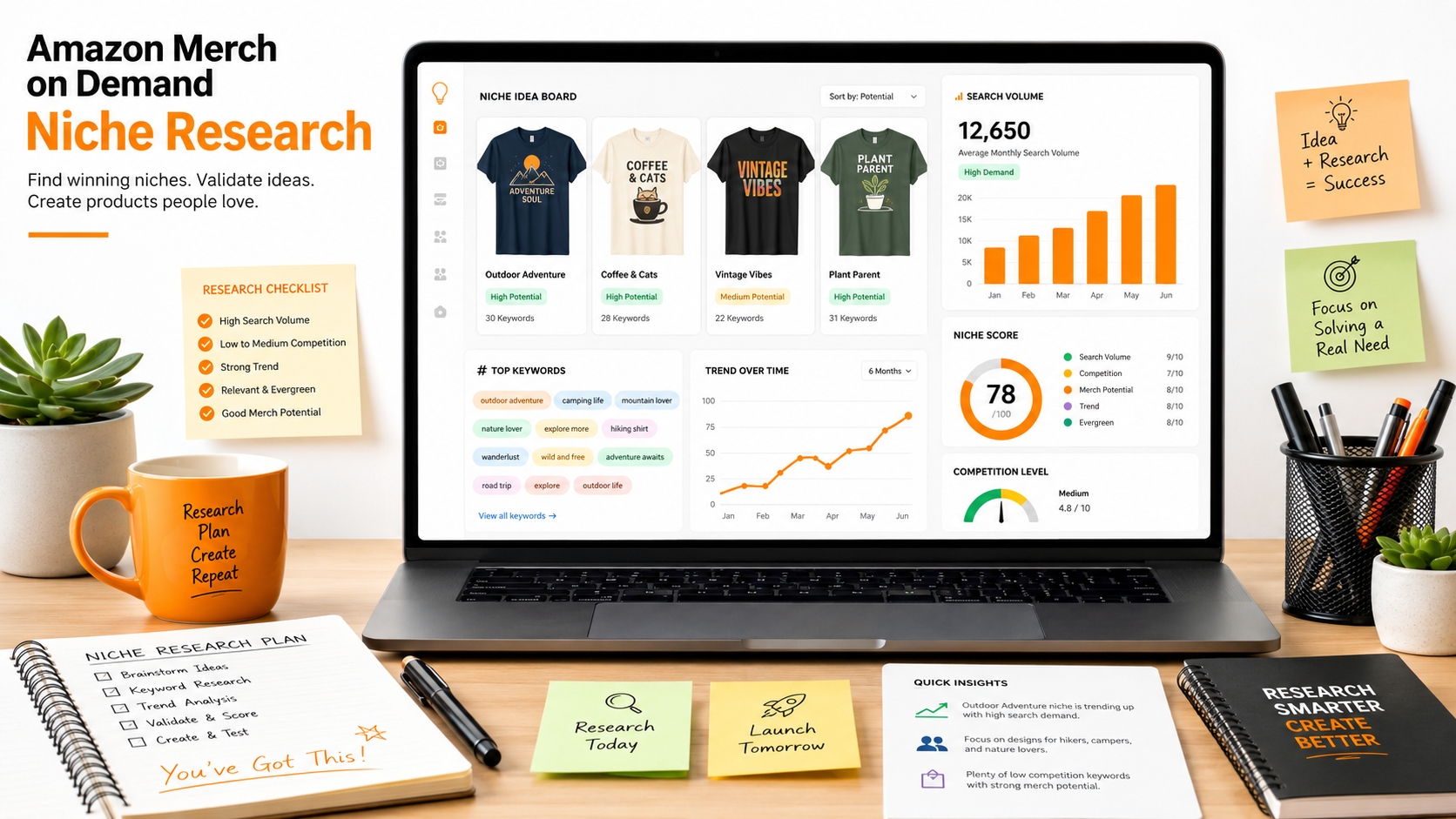
When Amazon sellers ask "how do I find Amazon Merch on Demand niches," they're really asking how to discover t-shirt ideas that have enough buyer interest to generate sales, but aren't already flooded with thousands of competing designs. The sweet spot is a niche where a specific subculture, profession, hobby, or identity group is actively searching for apparel they can identify with, and where the first page of Amazon results isn't dominated by established brands or sellers with hundreds of reviews.
A good niche balances three forces: clear demand, low saturation, and design repeatability. You don't need a massive audience; a tightly defined interest group can deliver consistent organic sales if you can create multiple design variations that speak directly to them. The framework below shows you exactly how to score such a niche so you never waste time designing for a market that won't buy.
What Makes a Good Amazon Merch Niche?
Before diving into data, you need a mental model of what a "good" niche looks like on Amazon. Too many new creators jump on a broad theme like "funny cat shirts" and wonder why they never sell. The reason is that success on Merch depends on specificity: a well-defined buyer persona who will recognize themselves in your design and click "buy" without hesitation.
Clear buyer identity
A strong niche is anchored to a precise identity or interest. Instead of targeting "gardeners," go after "succulent lovers," "raised bed gardening enthusiasts," or "backyard chicken keepers." The more you can picture the person wearing the shirt, such as their age, hobbies, daily life, the easier it is to create a design that resonates. This clarity also makes listing optimization (title, bullets, backend search terms) straightforward because you can mirror the exact language your customer uses.
For example, a "crossfit mom" niche implies a buyer who is proud of balancing motherhood and intense fitness. You can design shirts that say "I whip my kids and my kettlebell" or "Crossfit mom: I lift more than my toddler." The messaging is instantly recognizable to the target, which increases click-through rate and conversion.
Repeatable design angles
A niche is only worth pursuing if you can generate at least 15–20 unique design concepts without repeating yourself. If you struggle to come up with more than five ideas, the niche is likely too narrow or you lack genuine insight into the subculture. Repeatability also matters for SEO, because the more relevant designs you publish under a coherent theme, the more Amazon will see you as an authority in that micro-category, which can improve organic ranking across all your listings.
✅ Checklist: Design Repeatability Test
- Can you list at least 15 shirt slogans or graphics for this niche?
- Do some ideas use wordplay, some are bold statements, and some are visual-only?
- Can you release new designs seasonally or for recurring events (holidays, graduation, etc.)?
- Is the niche broad enough to support sub-themes (e.g., "dog mom" → "golden retriever mom," "rescue dog mom")?
Seasonal or evergreen demand
Evergreen niches deliver steady, year-round sales (e.g., "proud nurse," "bass fishing shirts"). Seasonal niches spike around specific holidays or events (e.g., "Christmas teacher shirts," "St. Patrick's Day firefighter"). Both can be profitable, but they require different strategies. Evergreen niches are better for long-term ranking; seasonal niches demand at least 6–8 weeks of lead time for indexing. The ideal portfolio mixes 70% evergreen and 30% seasonal to smooth out monthly revenue.
You can verify seasonality with Google Trends or by observing Amazon's own bestseller movement. If a niche's search volume triples only in December, plan accordingly. This means you'd better upload designs by early October, and use the off-season to research the next seasonal wave.
Niche scoring table
Rapidly evaluate a niche idea by scoring it on a 1–5 scale for each of the four pillars below. A total score of 15+ suggests the niche is worth a deeper data audit. This table can be used in a spreadsheet or simply as a mental checklist when scrolling through your market research results.
| Pillar | 1 (Poor) | 3 (Average) | 5 (Strong) |
|---|---|---|---|
| Buyer Identity Clarity | Generic audience, no clear avatar | Some demographic signals | Easily picturable person with strong identity |
| Design Angle Repeatability | Fewer than 5 ideas | 10–15 reasonable ideas | 20+ unique slogans/graphics possible |
| Demand Visibility | No evidence of search or buying intent | Moderate search volume, some bestsellers | Consistent high search volume and BSR movement |
| Competition Saturation Level | First page all 100+ reviews, brands | Mix of strong & weak sellers | Most competitors have <30 reviews and amateur designs |
Record your quick scores in a niche tracker; later in the Data Points section you'll validate these gut-checks with hard numbers.
Data Points to Check Before Designing
Once you have a promising niche hypothesis, switch to a data-first mindset. The following five metrics, when examined together, paint a clear picture of whether a niche is worth the design investment. Use these checks to turn "gut feel" into a documented go/no-go decision.
Search demand
Start by measuring monthly search volume for your primary niche phrase and its top 5–6 variations. In SellerSprite's Keyword Research tool, look for root keywords with at least 1,000 monthly searches (US) for a sustainable niche. However, don't dismiss long-tail combinations that sum to thousands collectively. For example, "personalized cat mom shirt" (400 searches) + "cat mom gifts" (800 searches) + "crazy cat lady t-shirt" (600 searches) can create a viable demand ecosystem.
Competitor count
Search the main niche keyword on Amazon and observe the total number of results. For low-competition signals, you ideally want fewer than 2,000 results for a "low barrier" niche, though this number varies by category. More importantly, examine the first page: if more than 5 of the top 10 listings are from established brands (e.g., "Generic Brand" with 500+ reviews) or highly optimized Merch sellers with tens of thousands of BSR rankings, the niche may be too saturated for a new entrant.
Use SellerSprite's Chrome Extension to instantly view each competitor's estimated monthly sales, BSR history, and keyword rankings. This on-page intelligence helps you decide whether you can realistically outrank them with a fresh design.
Review depth
Average review count of the top 10 listings tells you how entrenched incumbents are. A first page where the average is under 30 reviews is a green flag; 30–80 is moderate; above 80 suggests it will be hard to gain visibility without significant external traffic or ads. Also pay attention to the age of reviews because old, inactive listings might be easier to displace.
Price range
Note the current pricing on page one. If the majority of top-selling shirts are priced below $15.99, margins may be razor thin after Amazon's fees. A desirable niche typically supports a standard shirt price of $18.99–$24.99, leaving room for profit even when running occasional promotions. Price data also signals customer willingness to pay; premium niches (e.g., "personalized wedding party shirts") often fetch higher price points.
Trend direction
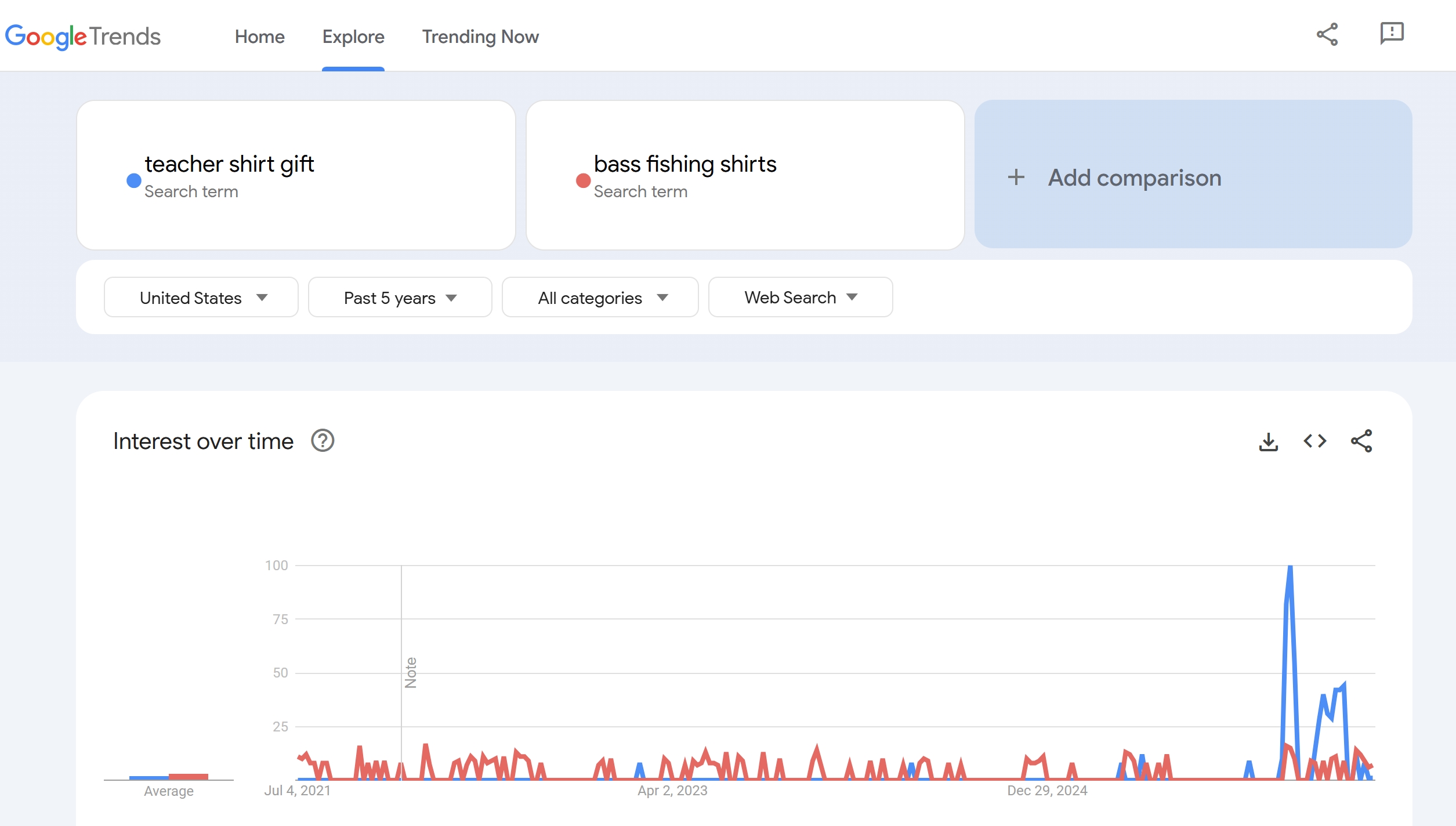
Confirm that the niche isn't in decline using Google Trends (filter by Shopping or Apparel) and SellerSprite's trend chart. A flat or slightly rising trend is safe; a spike followed by a cliff may indicate a fad you don't want to chase. Similarly, check if the niche has consistent year-over-year demand, especially important for evergreen plays.
SellerSprite Workflow for Merch Niche Research
The following step-by-step process leverages the full SellerSprite Merch toolkit to move from a blank slate to a validated niche shortlist in under 30 minutes. Each step builds on the previous one, creating a funnel that filters out weak ideas early.
Use Product Research for potential signals
Start in SellerSprite's Product Research module. Select "US" marketplace and filter by "Clothing, Shoes & Jewelry" or directly by "T-Shirts" if available. Sort by "Growth Rate" to identify subcategories that are climbing but not yet hyper-competitive. The tool shows you the top products that keep gaining traffic and sales; scan these lists for repeated themes, like "embroidered," "father's day," "veteran," or “pug” that hint at niche opportunities.
For instance, a surge in "birth month flower shirts" might reveal an underserved demand for personalized astrology-meets-garden designs. Note down 3–5 candidate niches that have respectable demand but aren't yet saturated with brand listings.
Use Keyword Research for phrase demand
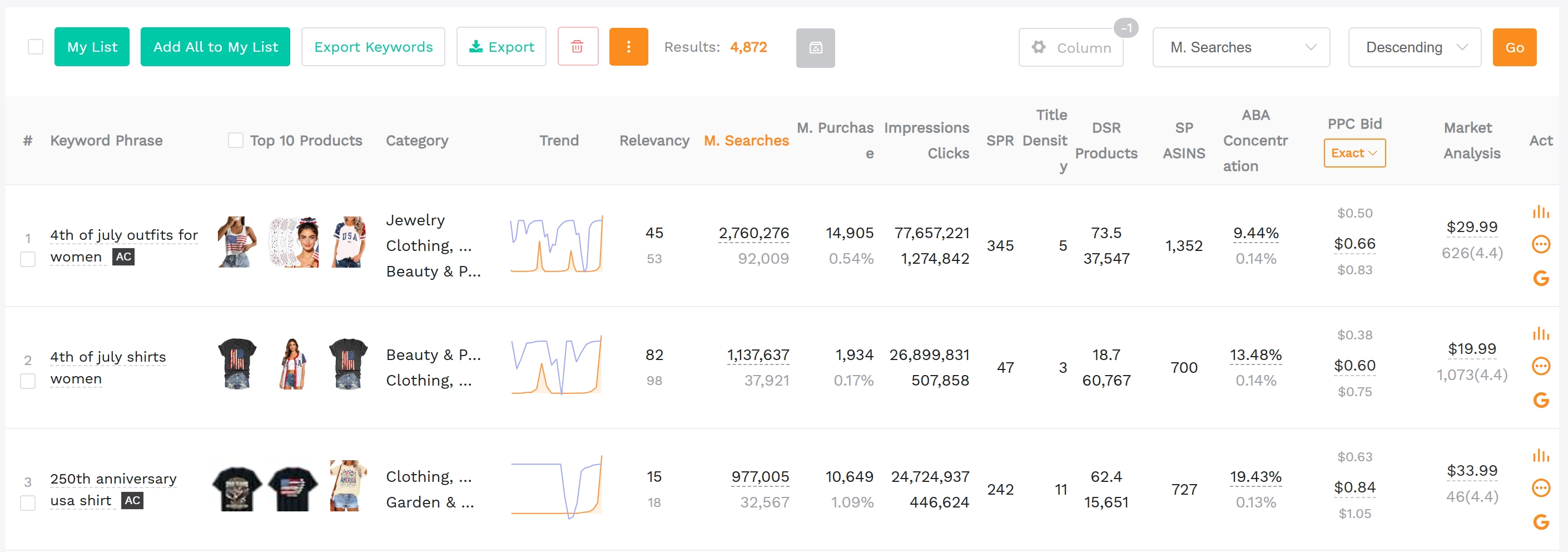
Take the niche keywords from Product Research and plug them into SellerSprite's Keyword Research. Look for the "Keyword Mining" or "Keyword Explorer" to expand your list. For a niche like "bird watching shirts," the tool will suggest related long-tail terms: "bird watching mom shirt," "bird watcher gifts," "bird nerd t-shirt," etc. Build a list of 20–30 keyword variations and note their monthly search volume and sponsored CPC (if you plan to run ads).
A niche is often more viable when you see a dense cluster of long-tail keywords with decent volume; this signals that customers are searching in multiple ways, giving you more hooks for listing optimization.
Use Chrome Extension for live competitor checks
Now open an Amazon search for your test niche. Activate the SellerSprite Chrome Extension, and the extension overlays real-time data onto the search results: each listing's estimated monthly sales, BSR, review count, and top-performing keywords. Quickly scan the first two pages.
If you see that most sellers have fewer than 100 BSR and low reviews but are still moving units, you've found a genuine low-competition sweet spot. Export this data to a spreadsheet or use the extension's "Save to Product List" feature for side-by-side comparison.
Save niche shortlist for validation
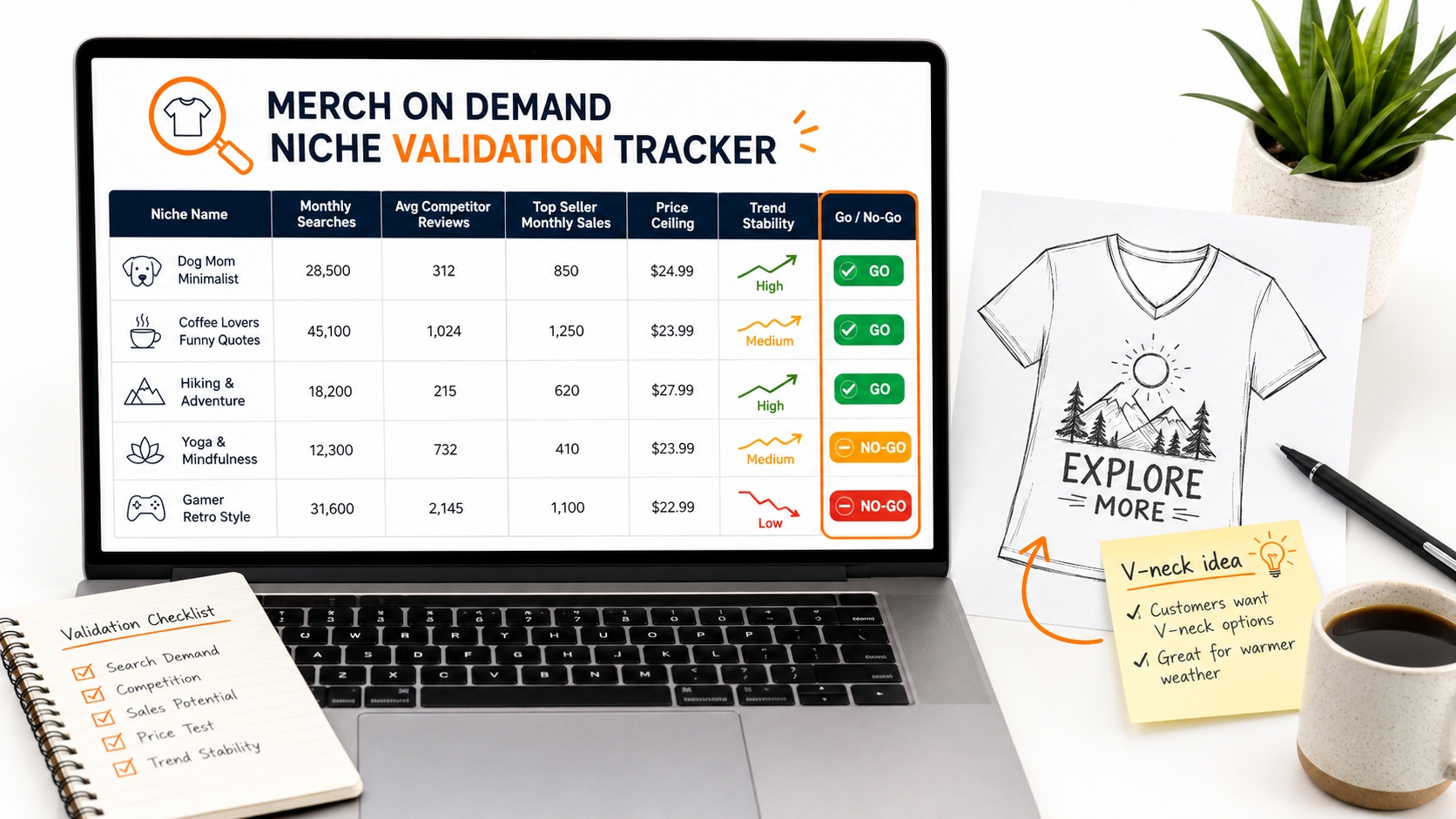
At this stage, you should have 3–5 niches that passed initial filters. Create a validation sheet with columns for: Niche Name, Monthly Searches (sum of top keywords), Average Competitor Reviews, Estimated Top Seller Monthly Sales, Price Ceiling, Trend Stability, and a "Go/No-Go" decision. Spend 10 minutes per niche diving deeper: reading customer reviews of competitors to spot unmet needs (e.g., "I wish this shirt came in a v-neck") that can become your unique angle.
Only start designing when a niche clears all five data checks and you've confirmed at least three competitor designs that you can noticeably improve upon (better typography, funnier message, higher-quality mockup). This validation step is what separates consistent earners from zero-sale uploads.
Common Niche Research Mistakes
Even experienced Merch creators fall into research traps. Recognizing these errors upfront saves months of wasted uploads and keeps your account in good standing.
Copying saturated trends
Seeing a trending topic like a viral meme or political slogan, and immediately uploading a derivative design is the fastest way to get lost in the noise. By the time you notice the trend on social media, hundreds of Merch sellers have already flooded Amazon. Instead, look for the "second wave" niches that the trend inspires. For example, if "gardening shirts" explode, niche down to "backyard beekeeper shirts" or "mushroom foraging apparel." Use SellerSprite's niche finder tools to spot these emerging sub-segments before they become crowded.
Ignoring IP risk
Even if a niche looks profitable, it can be a legal minefield. Avoid any design that references trademarked phrases, brand names, movie characters, sports team logos, or celebrity likenesses. Amazon's Merch on Demand team aggressively removes policy-violating content, and repeated strikes lead to account termination. Before uploading, run your phrases through the USPTO trademark database (TESS) and Google the phrase in quotes to see if it's commonly associated with a brand. Just because a niche is popular doesn't mean it's safe; many "dabbing unicorn" designs were taken down due to IP claims.
Designing before validating demand
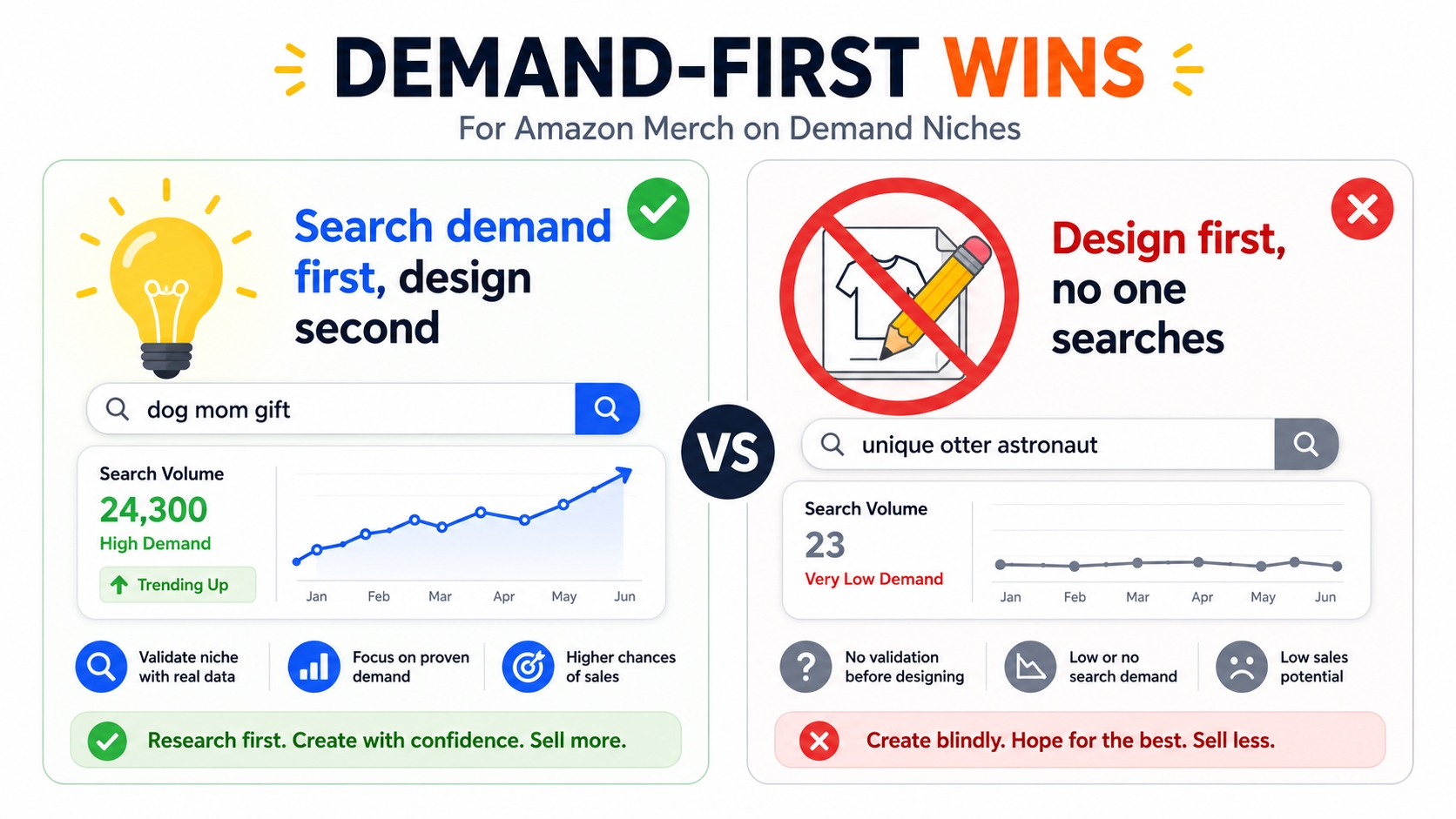
This is the most common mistake of all: spending hours crafting a beautiful t-shirt design, only to realize no one is searching for that exact phrase. Always reverse the process: validate the keyword demand first, then design to meet that demand. The data-driven approach ensures every hour you spend in design software is backed by evidence of buyer intent. If you're not yet confident in your research, start with our complete Merch on Demand guide to master the fundamentals before scaling.
FAQ
What is an Amazon Merch niche?
An Amazon Merch niche is a narrowly defined segment of the T-shirt (or other apparel) market on Amazon, characterized by a specific interest, identity, profession, hobby, or subculture. For example, "proud nurse shirts" or "golden retriever dad apparel." A niche isn't just a keyword; it's a community of buyers who share a common language and are likely to purchase multiple designs within that theme.
How to find low-competition Amazon Merch niches?
To find low-competition niches, use a combination of keyword research tools (like SellerSprite) to identify search terms with decent volume but few highly optimized listings. Look for niche ideas in real-world communities, social media groups, or hobbies you already understand. Then validate them by checking Amazon first-page results for weak sellers, low review counts, and designs that you can easily improve upon. The step-by-step workflow outlined in this article covers the full process.
What makes a Merch niche worth testing?
A niche is worth testing when: (1) search volume exists across multiple related keywords, (2) the top 10 Amazon listings average fewer than 30 reviews, (3) you can create at least 15 unique design concepts that resonate with the buyer, and (4) the niche shows either stable evergreen demand or a predictable seasonal spike you can prepare for. If these conditions are met, upload 3–5 designs as a test batch and analyze sales velocity over 4–6 weeks.
Should I choose evergreen or seasonal Merch niches?
Most successful Merch sellers balance both. Evergreen niches provide consistent monthly income and allow you to build long-term keyword ranking; seasonal niches deliver high short-term revenue but require careful timing. A common portfolio split is 70% evergreen and 30% seasonal. When researching a seasonal niche, always upload designs at least 6–8 weeks before the holiday to give Amazon's algorithm time to index your listings.
What niche research mistakes should Merch creators avoid?
The top three mistakes are: (1) blindly copying saturated trends without drilling into sub-niches, (2) ignoring intellectual property risks: designing around trademarked phrases or characters can get your account terminated, and (3) designing shirts before confirming there is actual search demand for those exact phrases. Always validate demand, check IP, and look for where you can genuinely improve upon existing designs rather than simply replicate them.
Next Steps
- Open SellerSprite for free and start a market research session to identify 5 potential Merch niches.
- Run each niche through the five data checks and complete the scoring table. Keep the top 3 niches and sketch 10 design ideas for each before uploading.
References
- Amazon Merch on Demand Official Site View
- SellerSprite – The Complete Amazon Merch on Demand Guide View
- SellerSprite – Amazon Merch on Demand Toolkit View
- USPTO Trademark Electronic Search System (TESS) View
By SellerSprite Success Team
The SellerSprite Success Team combines 10+ years of Amazon FBA and digital marketing expertise to help Amazon sellers build profitable businesses. We rely on the data from SellerSprite's proprietary tools and continuous testing of niche research strategies to deliver actionable, proven advice.