- Start with product validation before supplier sourcing. Demand, competition, margin, reviews, and compliance should be checked before you buy inventory.
- The most beginner-friendly path is usually a focused private label test or a controlled wholesale model, depending on your budget and access to supply.
- Your profit calculation should include referral fees, FBA or FBM costs, storage, inbound shipping, packaging, returns, advertising, samples, software, taxes, and inventory cash flow.
- A strong listing needs clear positioning, trustworthy images, benefit-led copy, relevant keywords, A+ Content when eligible, and a review strategy that follows Amazon policy.
- The safest launch path is a 90-day validation plan: research, sample, calculate, list, launch, measure, and only then scale inventory and ads.
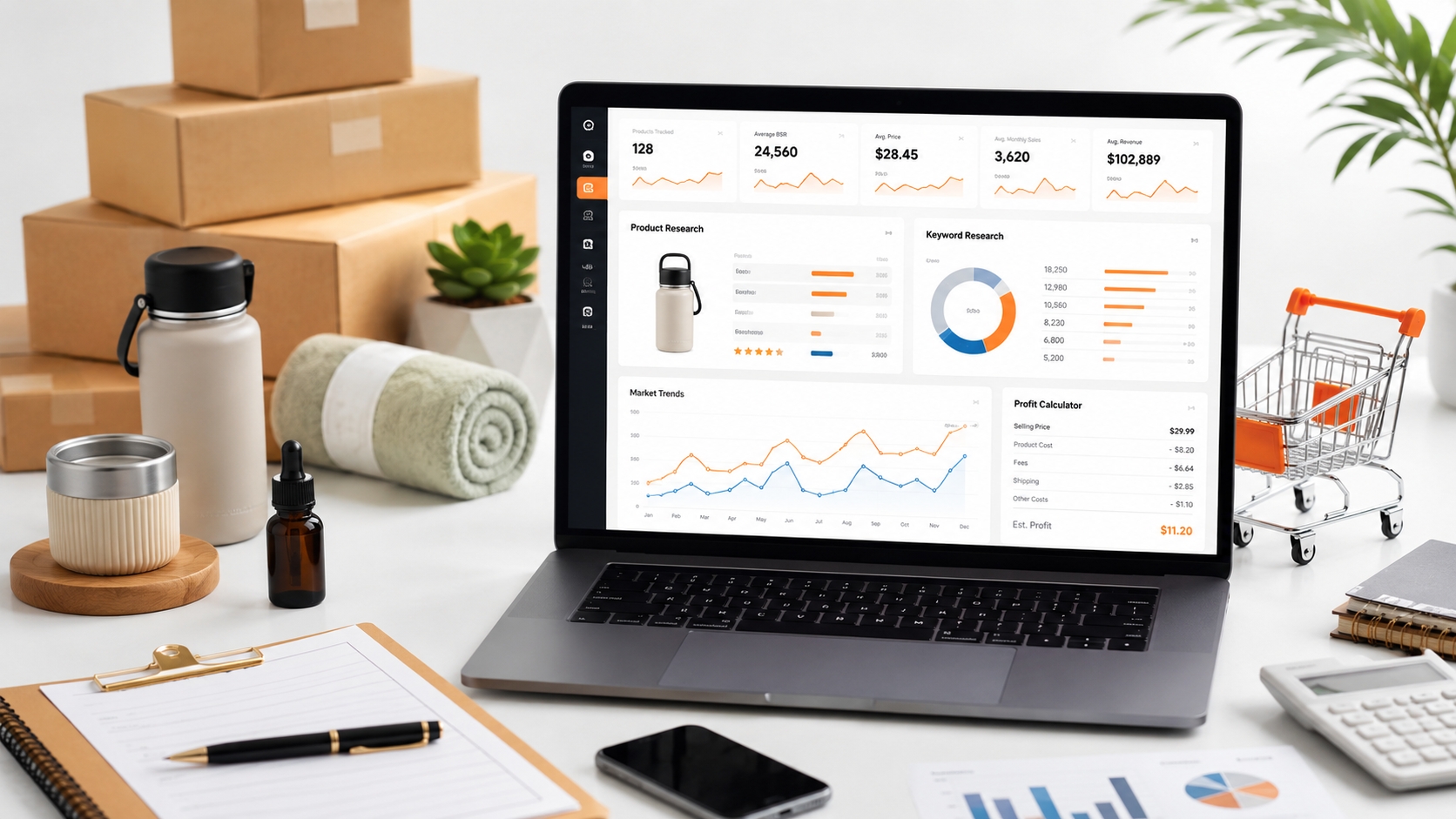
Is starting an Amazon business still worth it in 2026?
Yes, starting an Amazon business can still be worth it in 2026, but it is no longer a simple “find a cheap product, ship it to FBA, and wait” opportunity. The market is more competitive, ad costs matter more, compliance matters more, and customers expect better listings, faster delivery, and stronger proof before they buy.
The opportunity is still real because Amazon gives sellers access to an existing marketplace with search demand, payment infrastructure, fulfillment options, advertising tools, and customer trust already in place. For new sellers, that can shorten the distance between a product idea and real market feedback.
The challenge is that Amazon rewards sellers who treat the business like a data-driven operation. In 2026, your edge comes from choosing the right niche, validating demand before buying inventory, understanding true unit economics, building a differentiated offer, and continuously improving your listing and advertising performance.
A good Amazon business is not just a product. It is a system: product research, sourcing, margin control, listing optimization, inventory planning, ad testing, review generation, account health, and cash flow management.
Step 1: Choose the right Amazon business model
Before you create listings or contact suppliers, decide what type of Amazon business you want to build. Each model has different risk, capital needs, operational complexity, and growth potential.
| Business model | Best for | Main advantage | Main risk |
|---|---|---|---|
| Private label | Sellers who want to build a brand and control the offer | Higher differentiation, stronger brand asset, better long-term control | Requires product research, sourcing, branding, launch budget, and inventory risk |
| Wholesale | Sellers with access to brand distributors or B2B relationships | Can sell existing products with proven demand | Lower control, pricing competition, and possible brand restrictions |
| Online or retail arbitrage | Beginners testing Amazon with limited capital | Lower startup cost and faster learning cycle | Harder to scale, unstable supply, gated categories, and lower brand value |
| Handmade or custom products | Makers, designers, niche creators | Natural differentiation and storytelling | Production capacity and fulfillment complexity |
| Dropshipping | Experienced operators with reliable suppliers and strict process control | Lower inventory ownership | High policy, delivery, quality, and customer experience risk |
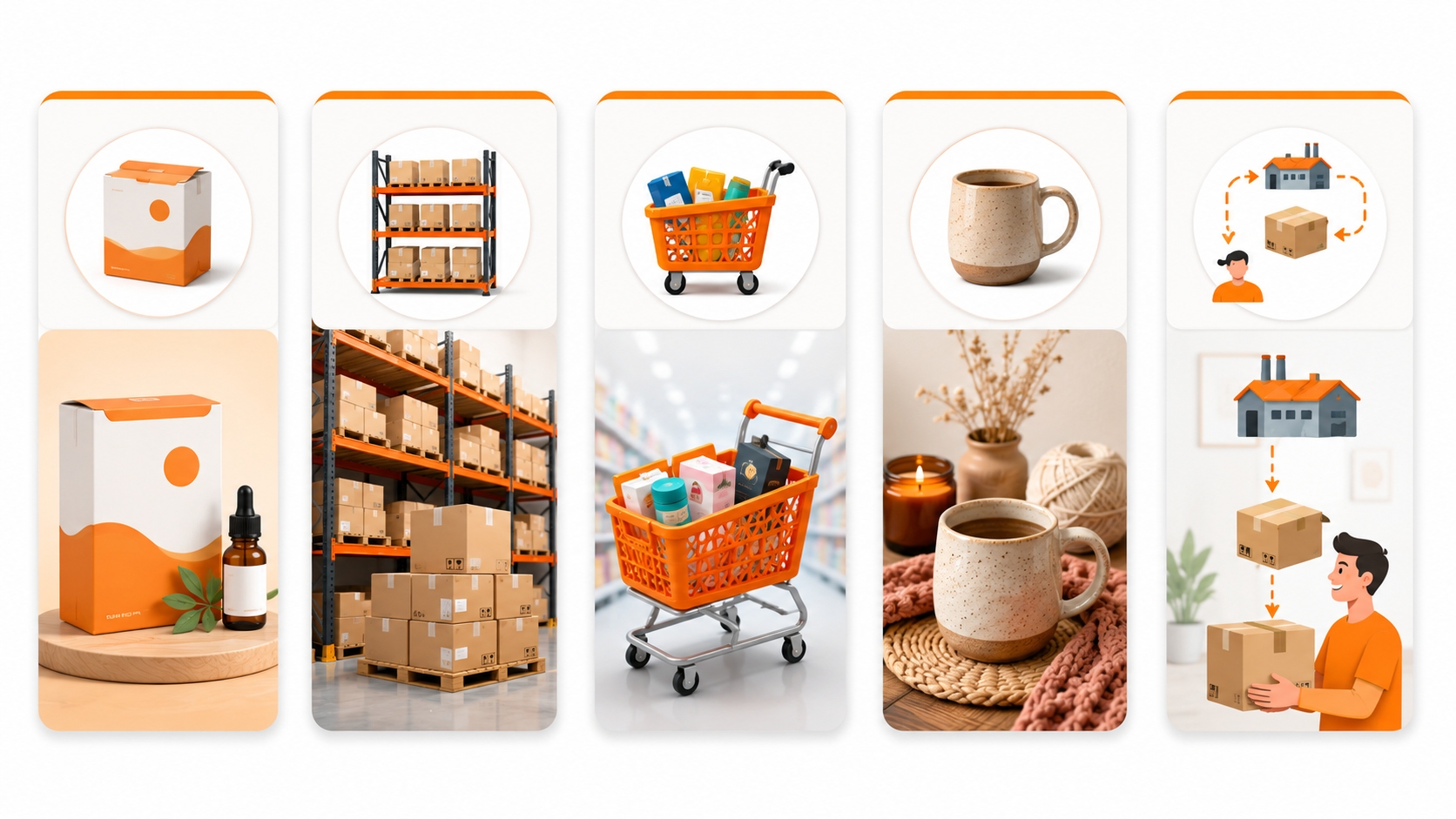
For most serious beginners, a narrow private label test or a controlled wholesale model is safer than chasing random trending products. The goal is not to launch many SKUs. The goal is to find one product where demand, margin, differentiation, and operations can work together.
Step 2: Find a product with real demand and survivable competition
Product research is the most important part of starting an Amazon business in 2026. A weak product cannot be saved by ads, design, or listing copy. A strong product gives you more room to optimize.
What a good Amazon product looks like
- Consistent demand: The niche has stable monthly search volume and sales, not only short-term hype.
- Manageable competition: You are not entering a category where every top result has thousands of reviews and aggressive pricing.
- Healthy margin: The product can survive Amazon fees, fulfillment, ads, returns, and discounting.
- Clear differentiation: You can improve the product, bundle it, reposition it, improve the design, solve a review complaint, or target a more specific use case.
- Compliance clarity: The product does not create unnecessary risk through restricted categories, safety claims, certification issues, intellectual property problems, or fragile logistics.
Product research checklist
- Search broad category terms and collect seed product ideas.
- Check monthly search demand for primary and long-tail queries.
- Review top competitors by price, reviews, rating, image quality, listing depth, and brand strength.
- Read negative reviews to find repeated product complaints.
- Estimate revenue and sales distribution across the top 10 to 20 listings.
- Calculate realistic landed cost, Amazon fees, ad cost, and expected margin.
- Check product size, weight, breakage risk, seasonality, and return risk.
- Confirm category rules, certification requirements, trademark conflicts, and patent risk.
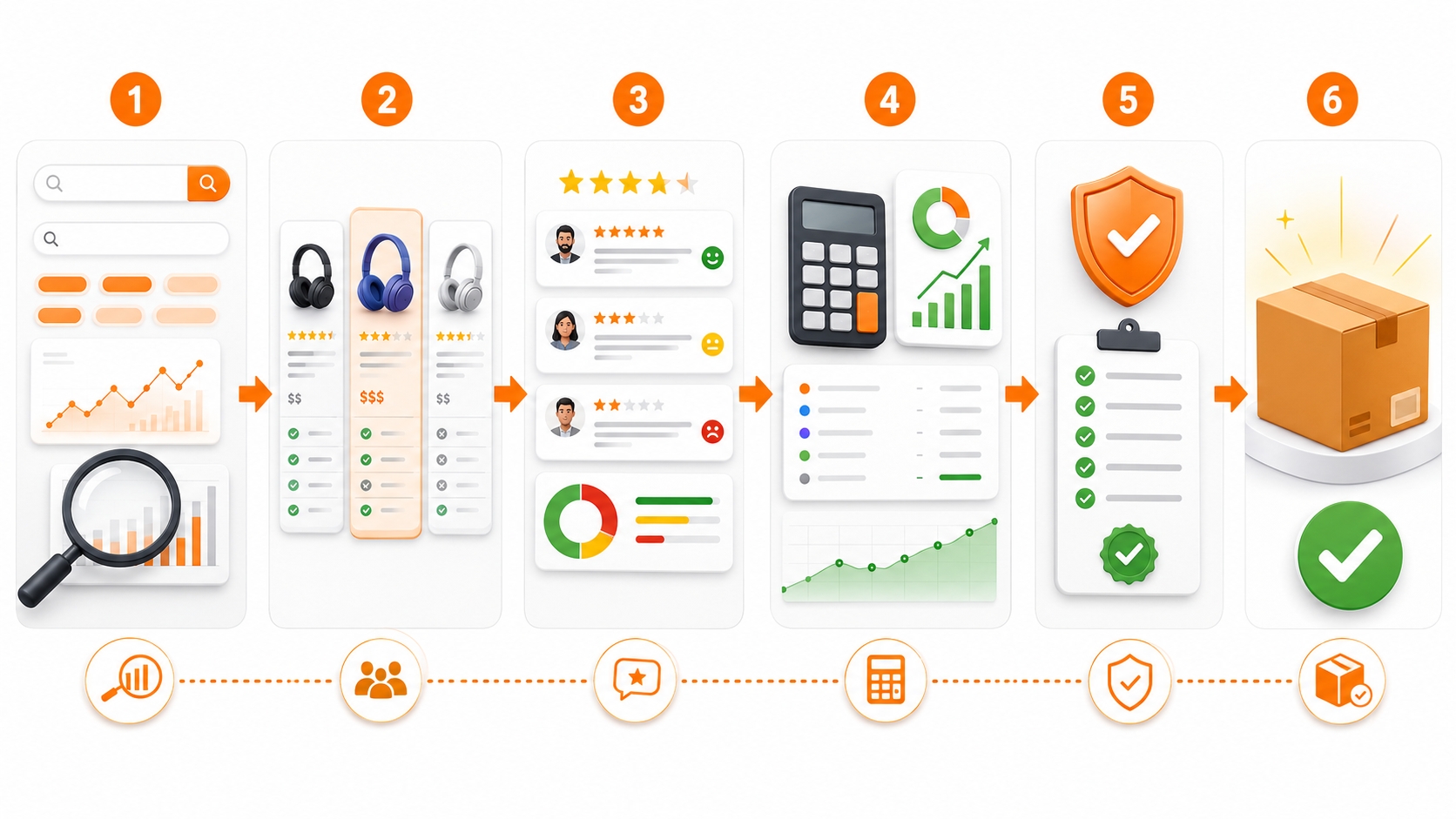
Do not choose products only because they look popular. Choose products where customer demand is proven, competition is survivable, and your offer can be meaningfully better.
Step 3: Calculate profit before you source inventory
Many new sellers fail because they calculate profit too simply. They subtract product cost from selling price and forget the real operating costs of Amazon. In 2026, you should calculate profit at the unit level before you place a purchase order.
Basic profit formula
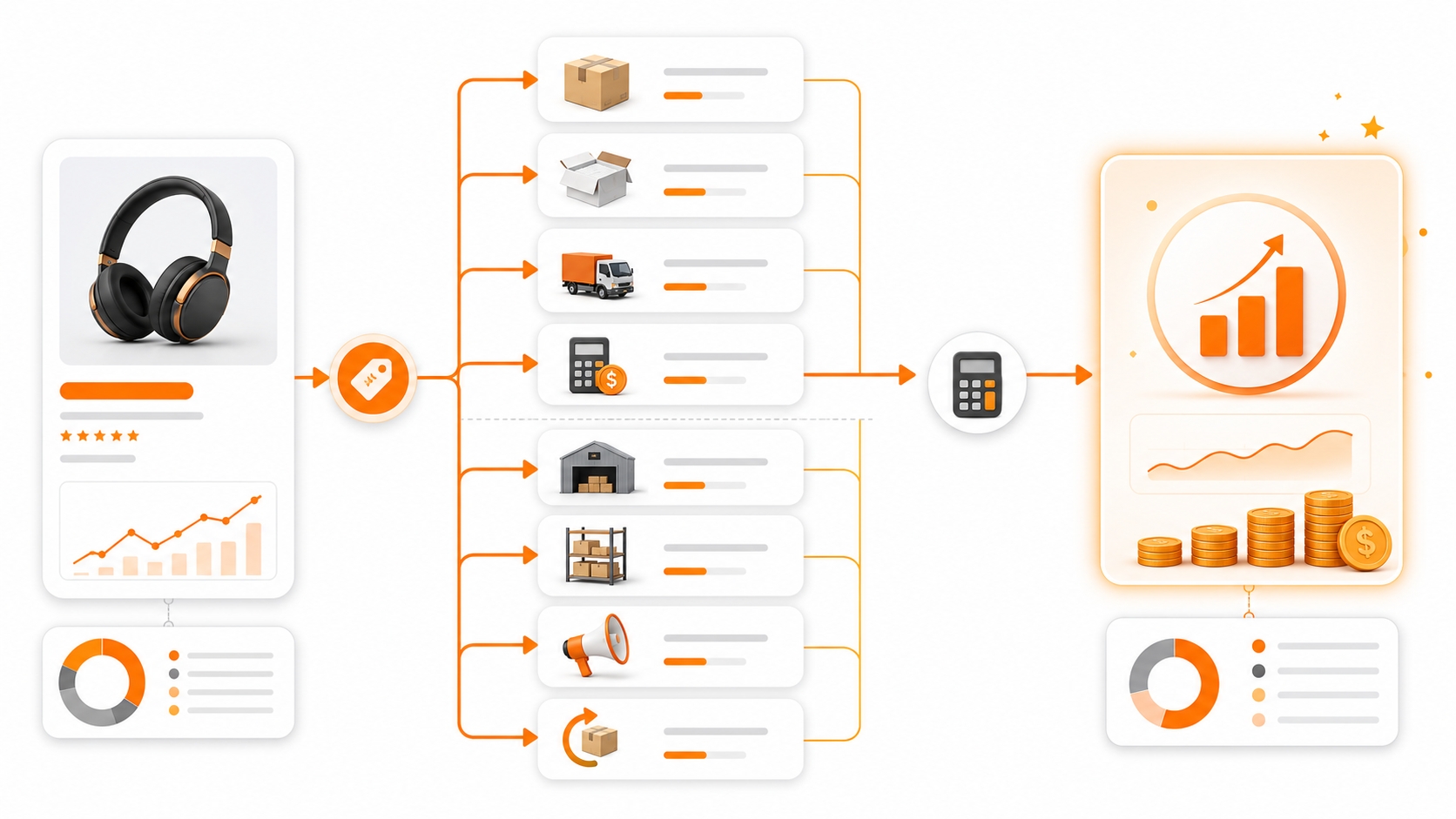
Net profit per unit = Selling price - product cost - packaging - inbound shipping - Amazon referral fee - fulfillment fee - storage allocation - returns allowance - advertising cost - promotion cost - operating adjustments.
Important costs to include
- Referral fee: Amazon charges referral fees by category. Many categories are around 15%, but the actual rate depends on the product category and price.
- Fulfillment fee: If you use FBA, Amazon charges fulfillment fees based on product size, weight, and other rules.
- Storage cost: Inventory that sits too long can hurt cash flow and increase storage expense.
- Inbound shipping and placement: Getting inventory into Amazon’s network can materially affect profit.
- Advertising: Launching without ads is difficult in competitive categories. Include expected PPC spend from the start.
- Returns and refunds: Some categories have high return behavior. Your margin must absorb it.
- Samples and inspection: Samples, quality inspection, and test orders are not optional for serious sellers.
| Metric | Recommended target for beginners | Why it matters |
|---|---|---|
| Gross margin before ads | 35% to 50%+ | Gives room for PPC, promotions, returns, and mistakes |
| Net margin after ads | 10% to 25%+ | Shows whether the product can actually make money |
| Break-even ACoS | Higher than expected launch ACoS | Helps avoid advertising yourself into losses |
| Inventory runway | 45 to 90 days for early tests | Reduces stockout and overstock risk |
| Review gap | Top competitors should not be unreachable | Prevents entering a niche where trust is almost impossible to catch |
Step 4: Set up your Amazon seller account correctly
Amazon offers Individual and Professional selling plans. If you are testing a few units casually, the Individual plan may be enough. If you want to build a real Amazon business, the Professional plan is usually the better fit because it unlocks more selling tools, reporting, advertising access, and growth programs.
Prepare these before registration
- Legal business name or personal information, depending on your structure.
- Government-issued identity document.
- Bank account and chargeable credit card.
- Tax information.
- Business address and phone number.
- Brand information, if you already have a trademark or packaging.
After registration, configure your account carefully. Set up two-step verification, payment information, return settings, notification preferences, user permissions, and tax settings. Then review Account Health regularly. A suspended or restricted account can damage your business more than a bad ad campaign.
If you plan to build a brand, consider Amazon Brand Registry once you meet the eligibility requirements. Brand Registry can help protect your brand and unlock brand-building tools such as A+ Content, Stores, and Sponsored Brands.
Step 5: Source, sample, and protect your supply chain
Supplier selection is not just about getting the lowest price. In 2026, product quality, consistency, packaging, lead time, and compliance are more important than shaving a few cents off the unit cost.
How to evaluate suppliers
- Ask for product samples from multiple suppliers.
- Compare materials, finish, packaging, durability, and real customer use cases.
- Request certifications or test reports if the product category requires them.
- Check minimum order quantity, production lead time, payment terms, and defect policy.
- Use pre-shipment inspection before paying the final balance.
- Confirm packaging dimensions because size and weight directly affect FBA costs.
Beginner sourcing rule
Do not order a large quantity only because the supplier offers a lower unit price. Your first purchase order should be large enough to test real demand, but small enough that a failed launch does not destroy your cash flow.
Step 6: Build a high-converting Amazon listing
Your Amazon listing must satisfy two audiences at the same time: Amazon search systems and human shoppers. Search relevance helps you get discovered. Clear positioning, images, reviews, and copy help shoppers buy.
Amazon listing checklist
- Title: Put the most important search phrase early, but keep it readable and compliant.
- Images: Use a clean main image, lifestyle images, scale images, benefit images, comparison images, and use-case images.
- Bullet points: Lead with customer benefits, then support each benefit with concrete product details.
- Description: Explain who the product is for, what problem it solves, and why it is different.
- Backend search terms: Add relevant non-repeated terms, spelling variants, and use-case terms where appropriate.
- A+ Content: If eligible, use rich content to explain the brand story, product benefits, comparison modules, and buying confidence points.
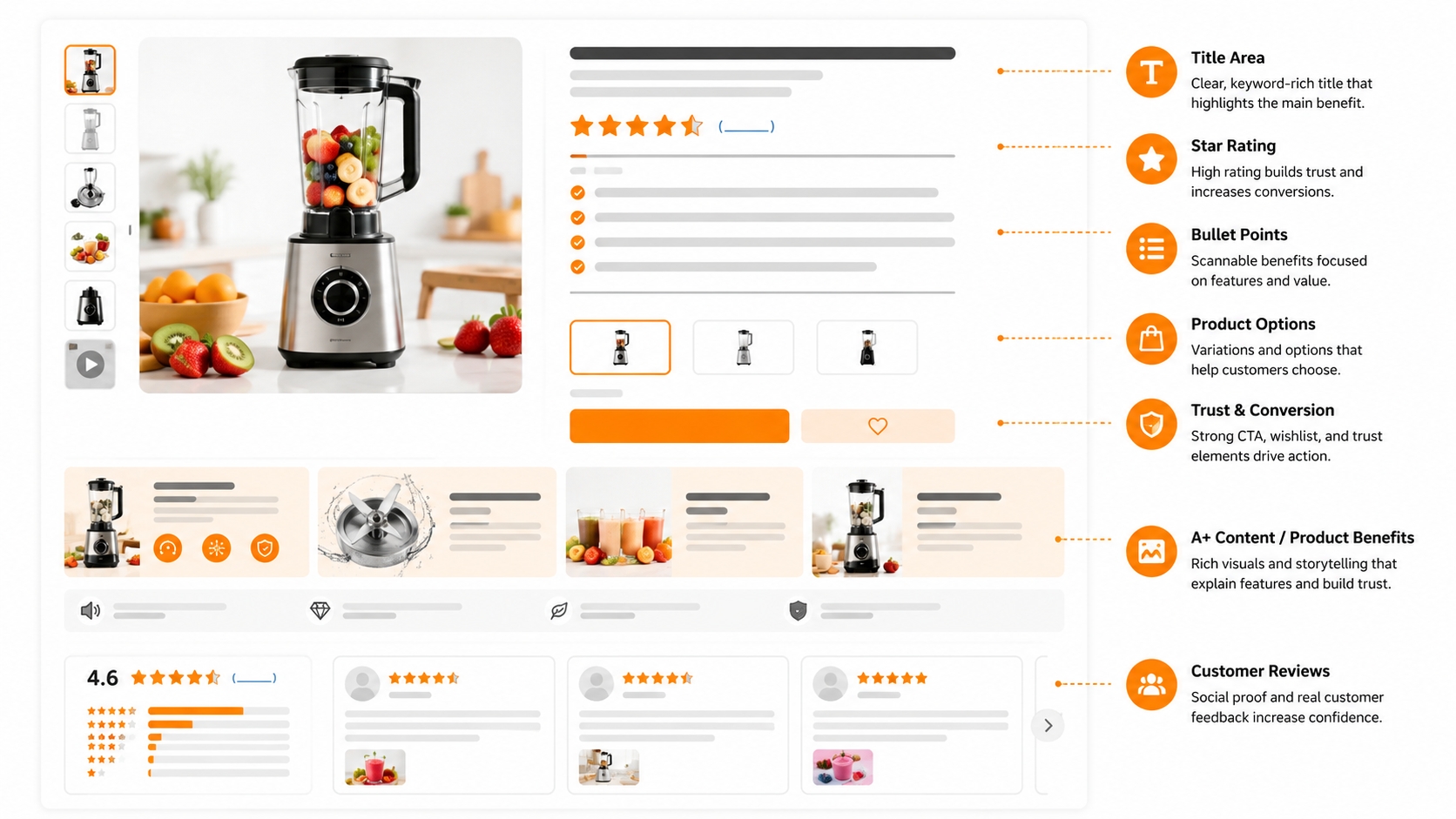
Listing structure example
| Listing element | What to include | What to avoid |
|---|---|---|
| Title | Product type, core feature, material, size, use case | Keyword stuffing, unsupported claims, unreadable phrases |
| Main image | Clear product view on compliant background | Text-heavy image, misleading props, low resolution |
| Bullets | Benefits, proof, dimensions, compatibility, use cases | Generic claims such as “high quality” without evidence |
| A+ Content | Brand trust, comparison, scenario education, visual explanation | Repeating the bullets with no added value |
| Q&A and reviews | Real customer concerns, usage clarity, objection handling | Policy violations, review manipulation, fake engagement |
Step 7: Choose FBA, FBM, or a hybrid fulfillment model
Amazon sellers usually choose between FBA, FBM, or a hybrid model. FBA means Amazon handles much of the fulfillment process, including picking, packing, shipping, customer service, and returns. FBM means the seller manages fulfillment directly or through a third-party logistics provider.
| Fulfillment model | Best for | Pros | Cons |
|---|---|---|---|
| FBA | Small to mid-size products with predictable demand | Prime eligibility, outsourced operations, customer trust | Fees, storage risk, inventory placement complexity |
| FBM | Large, heavy, custom, slow-moving, or fragile products | More inventory control, possible cost advantage for some products | Seller must manage shipping speed, customer service, and returns |
| Hybrid | Sellers who want backup inventory and channel flexibility | Reduces stockout risk and protects cash flow | Requires stronger operations and inventory tracking |
For beginners, FBA is often easier operationally, but it is not automatically more profitable. Always compare FBA and FBM using real product size, weight, selling price, expected storage duration, and return rate.
Step 8: Launch with keywords, ads, reviews, and inventory control
A successful Amazon launch is not one action. It is a sequence. Your goal is to collect enough data to prove whether the product can rank, convert, and make money after launch costs normalize.
Launch sequence
- Finalize your keyword map before the listing goes live.
- Check whether the listing is indexed for your main terms and important long-tail terms.
- Start with tightly controlled PPC campaigns: exact match, phrase match, broad discovery, and product targeting where relevant.
- Monitor impressions, click-through rate, conversion rate, ACoS, TACoS, sessions, unit session percentage, and ranking movement.
- Use Amazon-compliant review programs and post-purchase customer experience improvements.
- Watch inventory daily during launch so you do not stock out if the product works.
- Cut waste quickly. Move budget from low-intent search terms to proven converting terms.
Do not scale ads just because sales are coming in. Scale only when keyword rank, conversion rate, review quality, and net margin show that the product can survive outside the launch discount period.
Step 9: Optimize your business after launch
After launch, your job changes from “getting sales” to “building a repeatable operating system.” The best Amazon sellers improve small metrics continuously instead of looking for one magic tactic.
Weekly optimization checklist
- Keyword ranking: Track your primary and secondary keyword positions.
- Conversion rate: Compare conversion by traffic source, keyword, and listing changes.
- PPC search terms: Add converting terms, negate waste, and adjust bids by intent.
- Review insights: Identify product complaints, packaging issues, missing instructions, and customer objections.
- Inventory: Forecast reorder timing using sell-through rate, lead time, and safety stock.
- Profit: Monitor net margin after ads, returns, storage, and promotions.
- Account health: Review policy warnings, listing suppressions, and performance notifications.
Once one SKU is stable, consider variations, bundles, complementary products, off-Amazon traffic, brand content, and international marketplaces. Scale should come after proof, not before it.
How much does it cost to start an Amazon business in 2026?
The cost to start an Amazon business in 2026 depends on the model. A small arbitrage test may start with a few hundred dollars. A serious private label launch often requires several thousand dollars because you need samples, product design, inventory, packaging, shipping, listing assets, ads, software, and reserves.
| Expense | Lean test range | Brand-focused private label range |
|---|---|---|
| Seller account | Individual plan or Professional plan | Professional plan recommended |
| Samples and product testing | $100 to $500 | $300 to $1,500+ |
| Initial inventory | $500 to $2,000 | $2,000 to $10,000+ |
| Branding and packaging | $100 to $500 | $500 to $3,000+ |
| Product photography and creative | $200 to $800 | $800 to $3,000+ |
| Advertising launch budget | $300 to $1,500 | $1,500 to $8,000+ |
| Software and research tools | $50 to $300 per month | $100 to $500+ per month |
| Cash reserve | At least 20% of launch budget | 30% or more of launch budget |
A realistic beginner budget for a private label Amazon business is often between $5,000 and $15,000, depending on product complexity. You can start smaller, but the less capital you have, the more important product selection and risk control become.
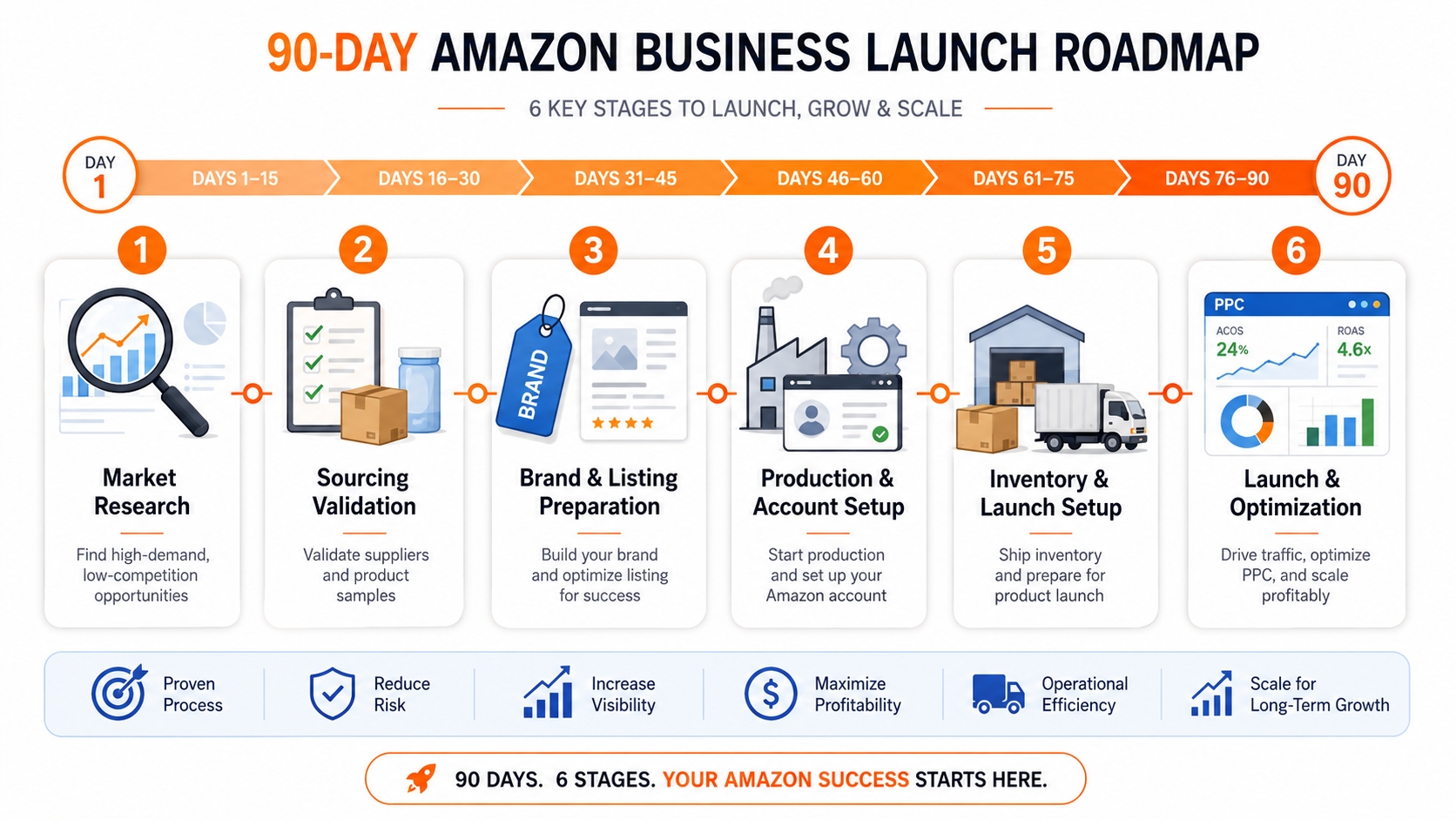
A realistic 90-day Amazon launch plan
A 90-day plan keeps you from jumping too quickly from idea to inventory. Use it as a practical validation path.
| Timeframe | Main goal | Actions |
|---|---|---|
| Days 1 to 15 | Market and product research | Build keyword list, analyze competitors, estimate demand, review negative reviews, screen product risks. |
| Days 16 to 30 | Profit and sourcing validation | Request quotes, order samples, calculate landed cost, estimate Amazon fees, compare FBA and FBM. |
| Days 31 to 45 | Brand and listing preparation | Finalize positioning, packaging, product images, keyword map, title, bullets, description, and backend terms. |
| Days 46 to 60 | Production and account setup | Confirm supplier, inspect production, prepare seller account, create listing, plan fulfillment workflow. |
| Days 61 to 75 | Inventory and launch setup | Ship inventory, prepare PPC campaigns, set launch price, create tracking dashboard, confirm review strategy. |
| Days 76 to 90 | Launch and optimize | Monitor ranking, conversion, reviews, ads, inventory, account health, and net profit. Decide whether to reorder, pause, or reposition. |
Common mistakes to avoid
- Choosing a product only because it has high revenue: High revenue can hide brutal competition, low margin, high returns, or strong brands.
- Ignoring fees: Referral fees, FBA fees, storage, shipping, returns, and ads can turn a “profitable” product into a loss.
- Ordering too much inventory too early: Your first order is a test, not a victory lap.
- Copying competitors without differentiation: Similar products with fewer reviews usually lose unless they solve a specific pain point.
- Launching without ads: In many categories, ads are necessary to generate early visibility and data.
- Breaking review policies: Fake or manipulated reviews can create serious account risk.
- Neglecting account health: Policy, performance, and listing issues should be handled before they become business-threatening.
Sources
Validate your Amazon product idea before buying inventory
Use SellerSprite to research Amazon keywords, estimate market demand, analyze competitors, track rankings, and build a data-backed launch plan.
FAQ
What is the best way to start an Amazon business in 2026?
The best way is to start with product research, choose a manageable business model, calculate true profit, test with controlled inventory, build a strong listing, and launch with a clear advertising and review strategy.
Is Amazon FBA still profitable in 2026?
Amazon FBA can still be profitable, but only when the product has enough margin after referral fees, fulfillment fees, storage, advertising, returns, and inventory costs. FBA is operationally convenient, but it is not automatically profitable.
How much money do I need to start selling on Amazon?
A small test can start with a few hundred dollars, but a serious private label launch often requires $5,000 to $15,000 or more. The required budget depends on product cost, order quantity, packaging, shipping, listing assets, and ad spend.
What should I sell on Amazon as a beginner?
Beginners should look for products with steady demand, manageable competition, healthy margin, simple logistics, low compliance risk, and clear differentiation opportunities. Avoid products with extreme seasonality, high return rates, strong patent risk, or heavy review barriers.
Should I use FBA or FBM when starting?
FBA is often easier for small and standard-size products because Amazon handles much of the fulfillment process. FBM may be better for large, fragile, slow-moving, customized, or low-margin products. Many sellers use a hybrid model as they grow.
Do I need a trademark to start selling on Amazon?
You do not always need a trademark to start selling, but a trademark can help if you want to build a brand and apply for Amazon Brand Registry. Brand Registry can unlock additional brand protection and marketing tools.
How long does it take to build a profitable Amazon business?
A realistic first launch can take 60 to 120 days from research to live sales. Reaching stable profitability may take longer because you need data, reviews, ranking, ad optimization, and inventory planning.