TL;DR: Discover how organic and sponsored keywords differ on Amazon, learn to read reverse ASIN reports, and apply proven tactics to dominate both search and ad spaces.
Key Takeaways
- Organic keywords drive long‑term rank, while sponsored keywords provide immediate visibility.
- Reverse ASIN reports let you spot the exact split between organic rank and ad rank for any competitor.
- Strategic use of both signals prevents cannibalization and maximizes overall Amazon traffic.
Table of Contents
- Introduction: The Danger of Misreading Keyword Data
- Defining the Battlefield: Organic vs. Sponsored Keywords
- How to Read a Reverse ASIN Report (Spotting the Difference)
- Strategic Plays: Stealing Competitor Keyword Strategies
- The 2026 Edge: Marrying Reverse ASIN Data with Amazon SQP
- Conclusion: Build a Bulletproof Keyword Strategy
- FAQ
- References
Note on marketplaces: This guide is specifically optimized for the US market.
Introduction: The Danger of Misreading Keyword Data
New and growth‑stage sellers often treat every keyword score as a direct sales indicator. In reality, Amazon mixes organic rankings with paid ad placements, and a mis‑read can waste budget on "ghost" traffic that never converts. Understanding the distinction is the first step toward a data‑driven keyword strategy.
Defining the Battlefield: Organic vs. Sponsored Keywords
What are Amazon Organic Keywords? (The Long‑Term Asset)
Organic keywords are the search terms that drive traffic to your listing without any ad spend. Amazon's A10 algorithm considers relevance, sales velocity, price, and reviews to rank these terms. A high organic rank is a durable asset that keeps delivering sales even when ad budgets dip.
What are Sponsored Keywords? (The Pay‑to‑Play Accelerator)
Sponsored keywords are the pay‑per‑click (PPC) bids you place in Amazon Advertising. They appear above or below organic results, giving immediate visibility. While they can dominate prime real‑estate, their performance is tied to bid amount, budget, and ad quality score.
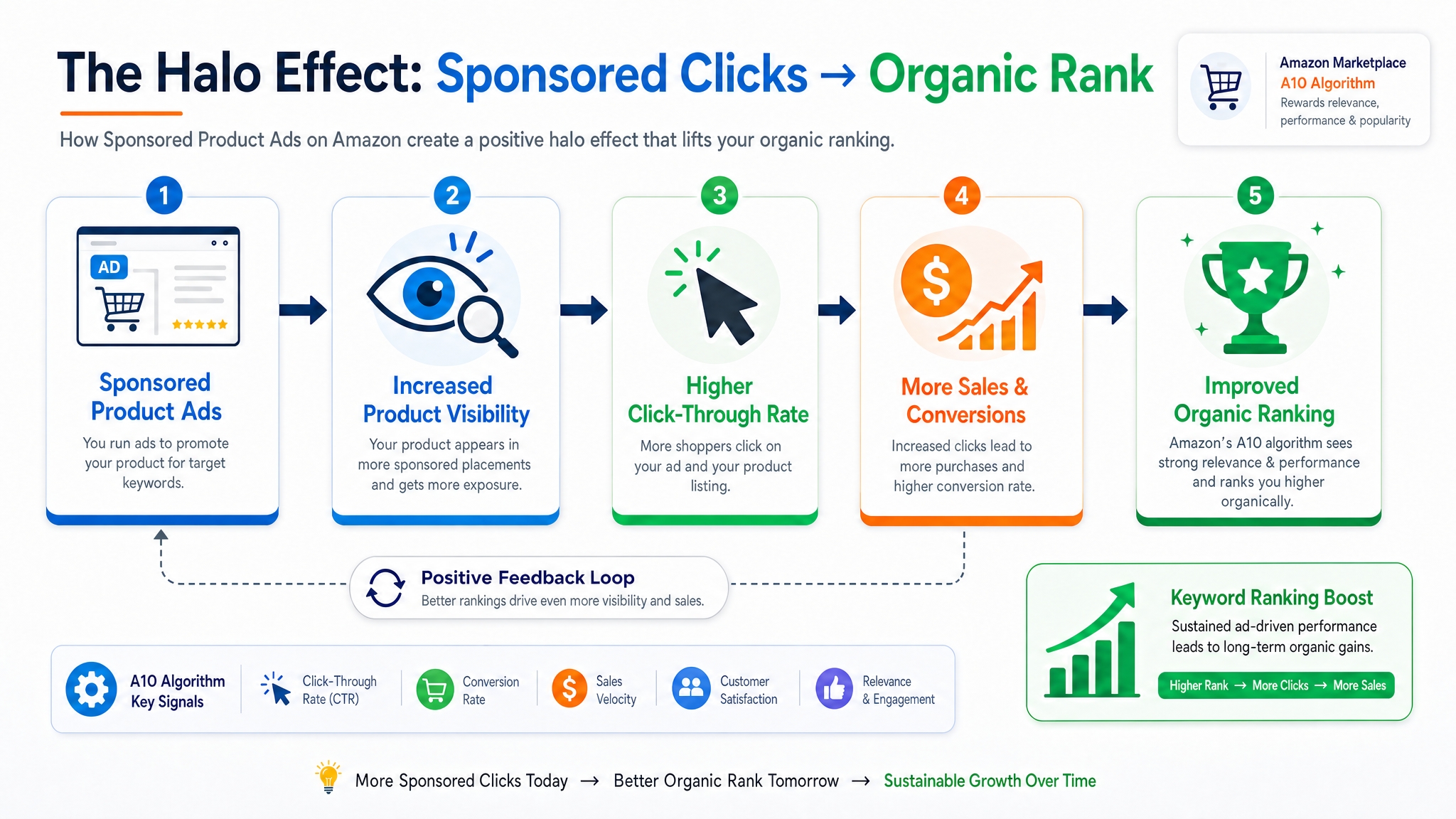
The "Halo Effect": How Sponsored Placement Fuels Organic Rank
Amazon's algorithm takes early ad clicks as a signal of relevance. A well‑crafted sponsored campaign can boost organic rankings over time, which is a phenomenon known as the halo effect. The key is to balance spend so the ad data feeds the organic signal without cannibalizing your own sales.
How to Read a Reverse ASIN Report (Spotting the Difference)
A reverse ASIN report shows you the keywords that competitors rank for, both organically and via ads. By dissecting this data you can pinpoint gaps and opportunities.
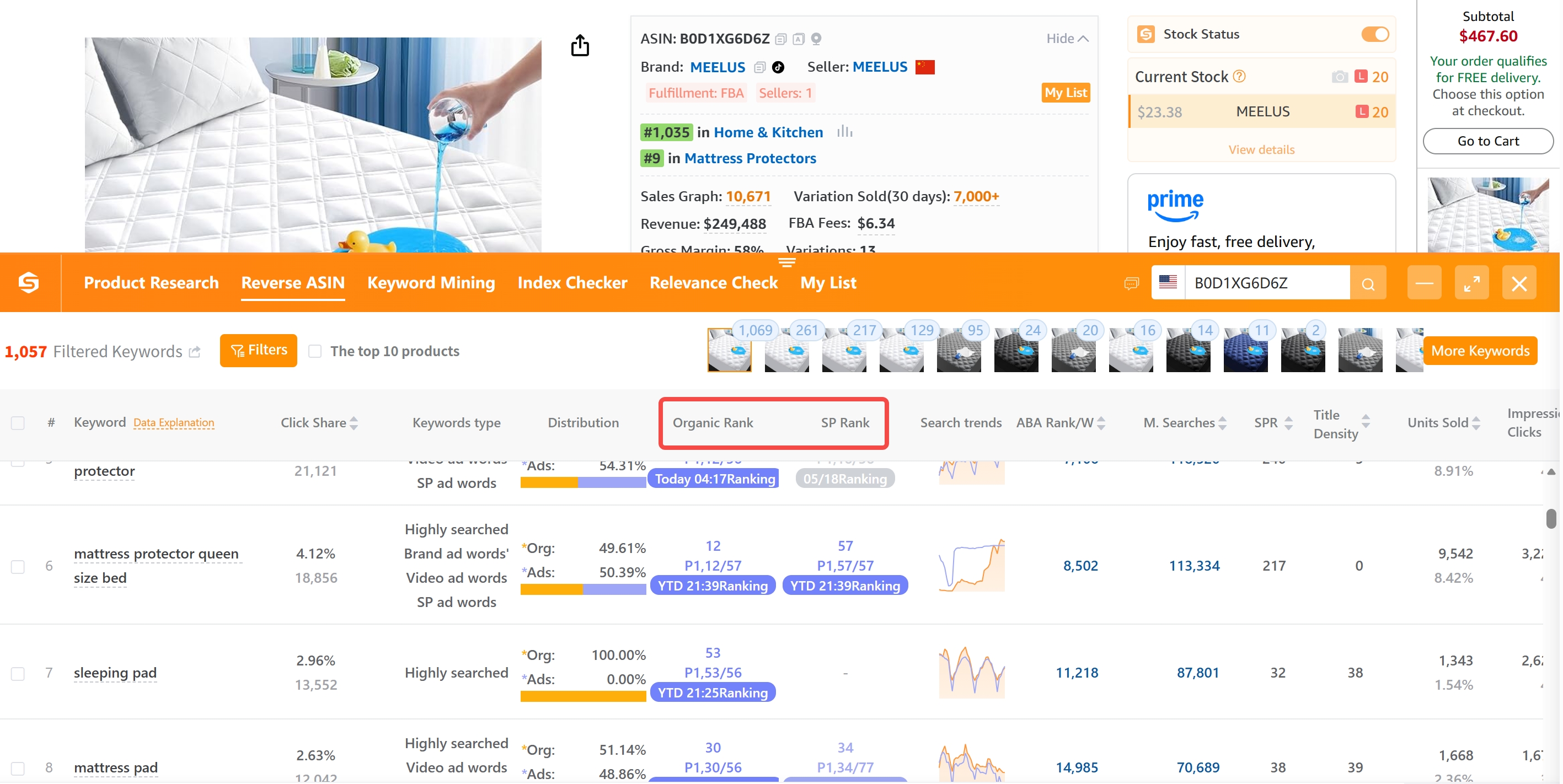
Metric 1: Organic Rank vs. Sponsored Rank
Look for two columns: "Organic Position" and "Sponsored Position". An organic #1 with a sponsored #5 indicates the competitor relies on natural relevance, while a sponsor #1 with no organic presence suggests heavy ad spend.
Why a #1 Sponsored Rank Doesn't Mean High Organic Relevance
A top ad slot can be bought on keywords that are low‑search volume or poorly served by organic listings. This can create a false impression of market dominance if you only look at the ad rank.
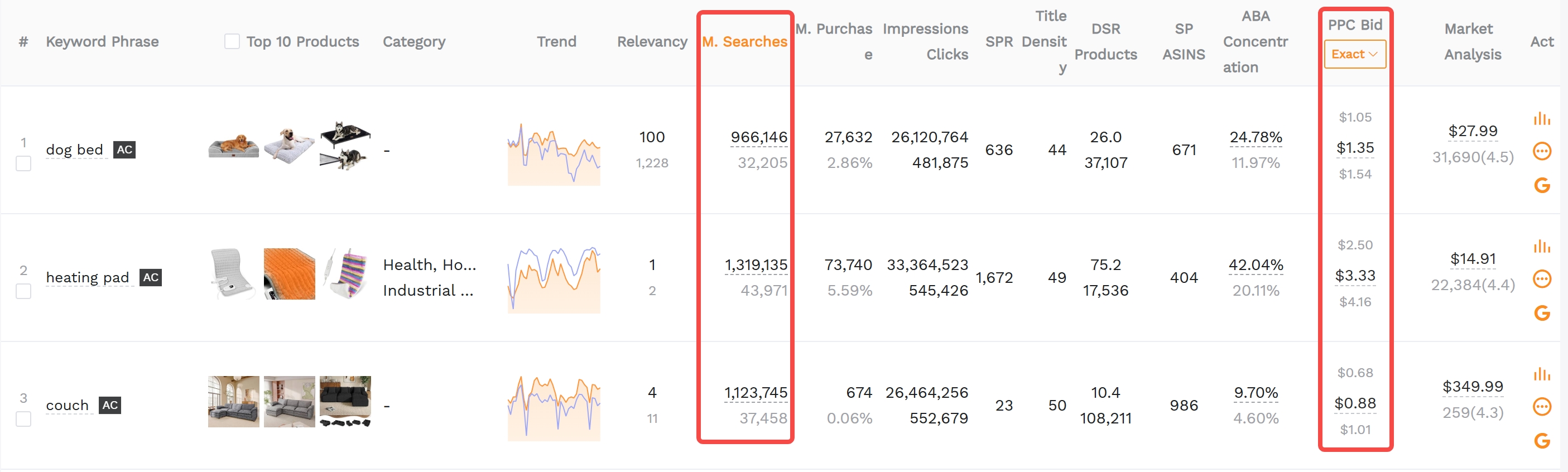
Metric 2: Search Volume vs. Competing Products
High search volume paired with many competing products signals a competitive niche. Spot "ego keywords"—terms competitors overbid on to block each other—by comparing bid amounts against volume.
Identifying "Ego Keywords" Your Competitors Are Overpaying For
If a keyword shows a high average CPC but low conversion rates for your competitor, it may be a defensive bid. You can either avoid it or use it to force the competitor to spend while you capture organic sales.
Metric 3: Historical Trend Lines (The 90‑Day Rule)
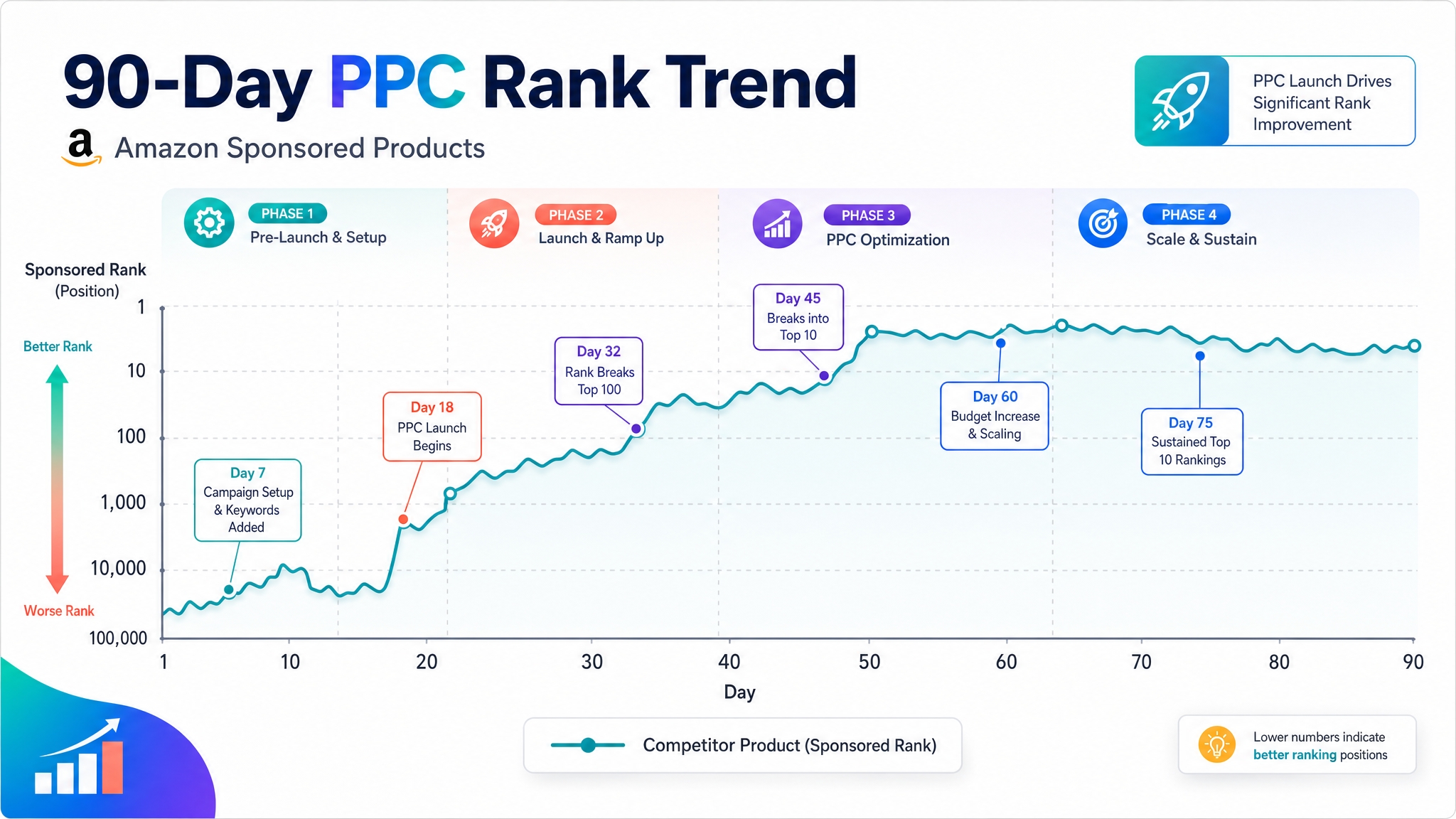
Trend lines reveal spikes that often align with product launches, promotions, or clearance sales. A sudden surge in sponsored rank without a matching organic rise usually indicates a temporary ad push.
How to Spot a Competitor's Aggressive Product Launch or Clearance Sale via PPC Spikes
Apply the 90‑day rule: if a keyword's sponsored rank jumps >30 positions within a 30‑day window and then drops, it's likely a launch or clearance event. Use this insight to time your own campaigns for maximum impact.
Strategic Plays: Stealing Competitor Keyword Strategies
Scenario A: High Organic Rank, Low Sponsored Presence
If a competitor dominates organically but rarely ads, you can capture the ad space at a lower CPC. Bid on the same high‑traffic keywords, and let your ads siphon the top‑of‑search clicks while the competitor's organic listing still receives residual traffic.
Scenario B: Low Organic Rank, High Sponsored Aggression
When a rival relies on heavy PPC spend to appear, you can out‑bid strategically on a few core keywords and simultaneously improve your organic listing (better images, enhanced brand content). This two‑pronged approach drains their ad budget and builds your own organic equity.
Avoiding the "Cannibalization Trap"
Running ads on keywords you already rank #1 for can cause internal competition, which means your ad may eat your own organic clicks, raising ACOS without adding real sales. Use the reverse ASIN data to identify where you're already #1 organically and pause those bids.
The 2026 Edge: Marrying Reverse ASIN Data with Amazon SQP
Amazon's Search Query Performance (SQP) reports are now available via the 1P Seller Central API. Cross‑reference SQP "search query" data with reverse ASIN insights to validate third‑party tool estimates and uncover hidden high‑intent phrases.
Validating Third‑Party Estimates with 1P Amazon Search Data
Third‑party tools often overestimate volume for niche terms. Pull the exact query volume from SQP, compare it against the reverse ASIN's "estimated volume", and adjust your bids accordingly. This ensures you're not overpaying for low‑value traffic.
Conclusion: Build a Bulletproof Keyword Strategy
By treating organic and sponsored keywords as complementary forces, leveraging reverse ASIN reports, and validating data with Amazon SQP, you can create a resilient keyword plan that drives traffic, protects margins, and scales with market changes.
Ready to put these tactics into action? Explore our Reverse ASIN tool and start optimizing today.
FAQ
How do organic keywords impact Amazon product rankings?
Organic keywords are the core of Amazon's A10 algorithm. When a product's listing aligns with a search term through title, bullet points, backend search terms, and relevance signals, it can earn a higher organic position. High organic rank delivers sustainable traffic, especially when ad spend is limited.
What are the benefits of using sponsored keywords on Amazon?
Sponsored keywords provide instant visibility at the top of search results, accelerate sales velocity, and generate data for keyword validation. They also create a halo effect that can improve organic rankings over time when managed strategically.
How do I know if an Amazon keyword is organic or sponsored?
Use a reverse ASIN report or Amazon's Search Query Performance data. The report lists "Organic Position" and "Sponsored Position" for each keyword. If the keyword appears only in the Sponsored column, it's a paid term; if it appears in the Organic column, it's ranking naturally.
Why does my reverse ASIN tool show a competitor ranking, but I can't see their ad?
The competitor may be ranking organically for that keyword while running a low‑budget ad that doesn't trigger on your device or location. Reverse ASIN data pulls 1P Amazon search logs, which capture all ad impressions, even those below your visibility threshold.
Should I bid on a keyword if I already rank #1 organically?
Generally, no. Bidding on a keyword where you already own the organic spot can cause cannibalization, raising ACOS without increasing true sales. Instead, focus on complementary keywords or use the ad slot to protect against competitors.
Next Steps
- Visit our Reverse ASIN tool and enter your competitor ASINs.
- Analyze the organic vs. sponsored rank columns, apply the 90‑day rule, and identify high‑value "halo" keywords.
- Build a dual‑track campaign: bid on gaps, protect your #1 organic spots, and monitor performance weekly.
References
- Amazon SEO Best Practices View
- Reverse ASIN Strategy Guide View
- Amazon Organic vs. Sponsored Ranking Guide View
By SellerSprite Success Team
The SellerSprite Success Team combines years of Amazon marketplace expertise, data science, and e‑commerce growth strategy. Our specialists have helped thousands of sellers, from newcomers to mature brands, optimize organic rankings and PPC campaigns across Amazon marketplaces.