Selling wholesale on Amazon means becoming an Amazon reseller who buys products in bulk at wholesale prices, then resells them on Amazon for a profit. Unlike retail arbitrage, you are not chasing one-off clearance deals. Unlike private label, you are not building a new product or brand from scratch. You are sourcing established products from manufacturers or authorized distributors, then scaling with reliable supply and consistent operations.
This guide explains how to buy wholesale for Amazon, how to list and sell wholesale on Amazon, and how to manage inventory at scale. You will use SellerSprite as your core research platform to evaluate demand, competition, and price stability so you can make smarter purchase decisions and build a business that grows.
Validate Wholesale Deals Before You Buy
Use SellerSprite to confirm demand, evaluate competition, and protect your margin before you buy wholesale for Amazon.
What Does Wholesale on Amazon Mean
Understanding the Wholesale Model
Wholesale on Amazon is a model where you purchase inventory in bulk from a manufacturer or distributor and then sell that inventory on Amazon. In most cases, the product already has an existing ASIN and a proven sales history. Your advantage comes from sourcing at a lower unit cost, keeping products in stock, and operating efficiently so you can win sales consistently.
In wholesale, you are often one of multiple sellers on the same listing. That makes data and planning essential. SellerSprite helps you evaluate whether a product has stable demand, whether competition is manageable, and whether pricing behavior supports your target profit.
Wholesale vs. Retail Arbitrage vs. Private Label
Wholesale, retail arbitrage, and private label are three distinct ways to sell on Amazon. Retail arbitrage focuses on buying discounted products at retail and reselling them on Amazon in smaller quantities. Private label focuses on launching a new branded product and building demand over time. Wholesale focuses on buying bulk inventory of established branded products, then selling them on Amazon using existing listings.
- Wholesale: bulk purchasing, established demand, invoices for authenticity and approvals, scalable replenishment
- Retail arbitrage: small batches, inconsistent supply, more manual sourcing, faster to start with low capital
- Private label: unique product and brand, higher control, higher launch effort, more marketing responsibility
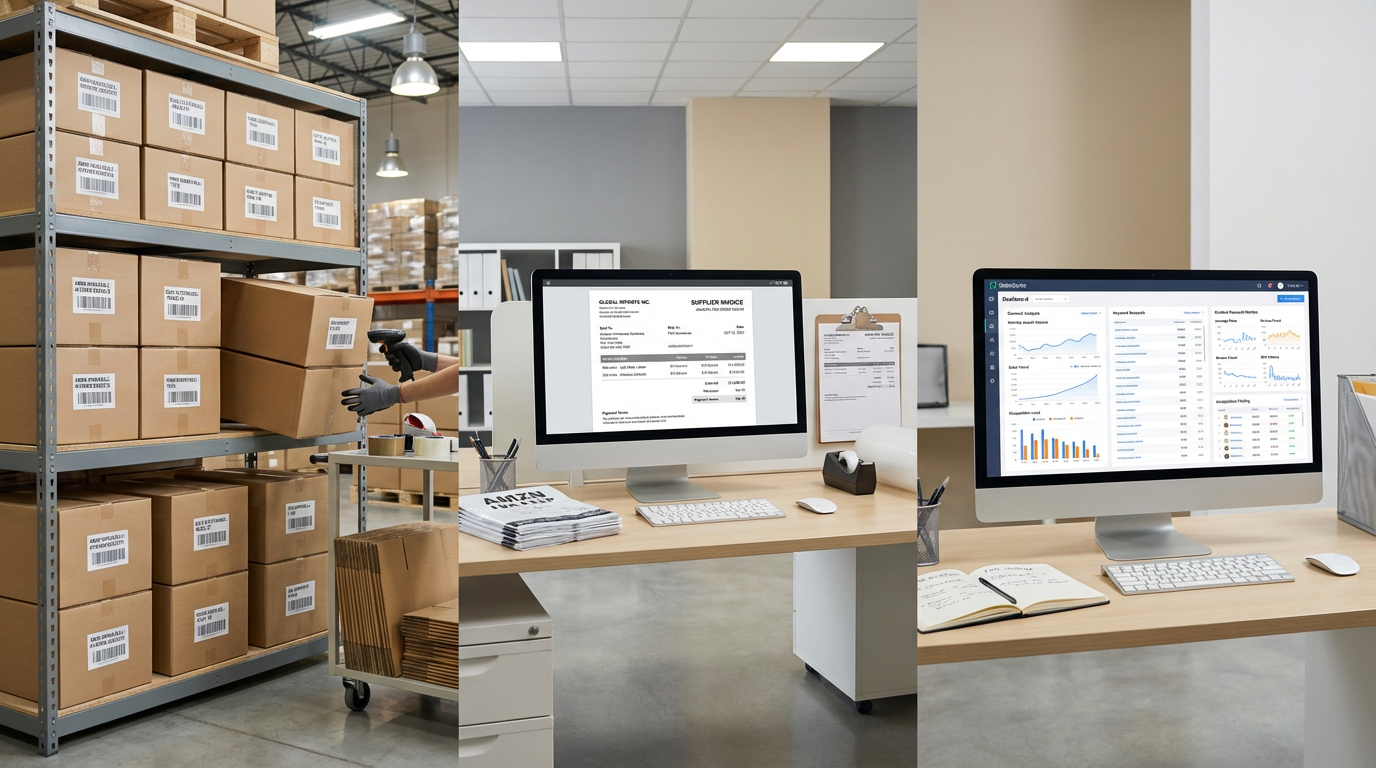
Setting Up a Wholesale Business for Amazon
Initial Requirements
Wholesale suppliers typically want to work with legitimate businesses. Before you start reaching out, prepare your basic documents and business setup so you look credible and can open accounts faster. Requirements vary by country and state, but the general principle is the same: you need a real business identity and the right tax documentation to buy inventory for resale.
- Business registration appropriate for your region
- Reseller permit or sales tax certificate if required locally
- A professional Amazon selling account to list at scale
Also, align your Amazon account information with your business documentation. Consistency matters when you submit invoices for approvals or respond to authenticity checks. A clean setup reduces friction as you grow.
Finding Reliable Wholesale Suppliers
The strongest wholesale businesses are built on supply. Reliable suppliers give you consistent inventory, accurate documentation, and predictable lead times. Start with channels that make verification easier and allow long-term relationships.
- Trade shows where you can meet distributors and brand reps in person
- Wholesale directories and B2B platforms where supplier credentials are visible
- Direct outreach to brands to request authorized reseller access
- Referrals from experienced sellers in the SellerSprite community
Before you commit, ask for a product catalog and pricing sheet, confirm whether they are authorized for the brands they sell, and request sample invoices so you can verify formatting. Strong documentation is important for selling gated brands and for account protection.
Evaluating Product Opportunities
When you buy wholesale for Amazon, your profit is made before you place the purchase order. Use SellerSprite to evaluate demand, competition, and price behavior so you do not lock cash into products that move slowly or collapse in price.
- Demand: use SellerSprite sales estimation and trend signals to confirm consistent sell-through
- Competition: check seller count, offer patterns, and whether Amazon is on the listing
- Profit: model fees and shipping cost, then set a minimum margin you will not cross
- Risk: check category restrictions and brand approval requirements before buying
Example scenario: A distributor offers you a case pack of 120 units for a household product that is already popular on Amazon. You pull up the listing, run the SellerSprite Extension, and find steady demand with moderate competition. You also notice stable pricing behavior and acceptable fees. That is a strong candidate for a first wholesale test order.
Purchasing and Listing Wholesale Products
Making Your First Wholesale Purchase Order
Your first order should validate the process, not only the product. Confirm minimum order quantities, negotiate pricing tiers, and understand payment and shipping terms. If possible, start with a manageable quantity that still meets MOQ so you can test sell-through and cash flow.
- Request an invoice that includes supplier details, your business name, and product line items clearly
- Confirm lead time and shipping method so you can plan reorders
- Recheck profitability using SellerSprite before you commit to a large quantity
Listing Existing Products on Amazon
Most wholesale items already have an ASIN. You add your offer to that listing in Seller Central, choose condition as new, set quantity, and choose fulfillment. The most important step is matching the product exactly and confirming you are eligible to sell the brand. If the brand is gated, your wholesale invoice is often a key requirement for approval.
- Match UPC, size, color, and pack count to avoid listing against the wrong ASIN
- Check listing restrictions before ordering, then keep invoices organized
- Use SellerSprite insights to avoid listings with unstable pricing and overcrowded offers
Winning the Buy Box
In the wholesale model, winning the Buy Box is often the difference between slow sales and consistent sales. Price matters, but so do fulfillment method, inventory availability, and account performance. The goal is not to undercut endlessly. The goal is to stay competitive while maintaining a minimum profit.
- Use FBA when possible to increase Prime conversion and Buy Box eligibility
- Monitor competitor pricing behavior with SellerSprite tracking so you can adjust calmly
- Set a minimum price based on your true costs so you do not sell at a loss
Managing Inventory and Fulfillment
Using FBA for Wholesale
FBA is a natural fit for wholesale because you are shipping bulk inventory and you want Prime conversion. Amazon handles packing, shipping, and many customer service issues, so you can focus on sourcing, pricing, and replenishment. The tradeoff is fees and storage costs, so your product selection must support those expenses.
- Send inventory that sells consistently to reduce storage fees and cash lockup
- Prepare products correctly so check-in issues and damage claims stay low
- Use SellerSprite demand signals to decide how many units to send for each replenishment cycle
Monitoring Stock Levels and Reordering
Wholesale scaling depends on staying in stock. Stockouts lose Buy Box share and slow down sales momentum. Overstock ties up cash and can increase storage costs. The solution is a simple reorder system based on sales velocity and supplier lead time.
- Estimate sales velocity using SellerSprite signals and your own order history
- Set reorder points based on weeks of cover, not guesswork
- Recheck demand and pricing before placing a reorder so you do not scale a declining product
Dealing with Brand Restrictions
Brand restrictions are common in wholesale. The advantage of wholesale is that you have invoices that can support approvals and authenticity checks. Keep invoices clean, consistent, and easy to retrieve. If Amazon requests documentation, respond quickly with accurate files and consistent business information.
- Work with authorized suppliers so invoice documents are reliable
- Avoid editing invoices and ensure supplier contact details are visible
- Use SellerSprite research to prioritize brands with stable listings and reasonable risk
Pros and Cons of the Wholesale Model
Pros: Established Demand, No Need to Create a Brand
Wholesale products already have demand. Customers know the brand and the listing has reviews. That can reduce the time it takes to start generating sales. You also avoid the work of product creation and early-stage launch uncertainty. Your business advantage comes from sourcing and operations, which can be improved with data and process.
Cons: Competition and Lower Margins
Wholesale listings can be competitive. Many sellers may offer the same product, which can compress margins and trigger price competition. The solution is disciplined product selection and consistent monitoring. Use SellerSprite to avoid overcrowded listings and to identify products where demand can support multiple sellers without destructive price behavior.
Higher Upfront Investment
Wholesale requires capital because you are buying in bulk. That means cash is tied up in inventory and reorders. Start with a test order approach, then scale only when you confirm sell-through. Over time, building supplier relationships can improve pricing and payment terms, which helps cash flow.
Conclusion: Scaling with Wholesale
Is Wholesale Right for You
Wholesale is a strong model for sellers who want to scale with established products and predictable replenishment. If you have access to capital, enjoy working with suppliers, and prefer data-driven decision-making, wholesale on Amazon can be a reliable long-term path. If your budget is limited, you can still start by testing small wholesale orders and reinvesting profits as you learn.
Long Term Growth
Long-term success comes from expanding your catalog strategically and strengthening supplier relationships. Use SellerSprite to build a shortlist of repeatable wholesale winners, monitor market behavior, and plan reorders based on real demand. As you gain experience, you can negotiate better pricing, improve payment terms, and scale into more product lines without losing control.
Build a Scalable Wholesale System
Use SellerSprite to research products, track competition, and plan replenishment so you can sell wholesale on Amazon with confidence.