If your Amazon PPC feels messy or unprofitable, it is usually not a mystery. It is structure, goals, and control.
In this chapter, you will learn a clean Amazon campaign framework that improves reporting and prevents one target set from consuming your whole budget.
Then you will set the right goal for your stage, choose a starting bid based on Amazon's suggested ranges, and use portfolios to stay organized as you scale.
Key Takeaways
- Use one campaign per ad group to prevent aggressive targets from consuming the whole budget.
- Define your PPC goal first: rank growth, ad profit, or total profit.
- Starting bids are not permanent. They are a baseline you adjust weekly or monthly.
- Use Amazon's suggested bid ranges to set a realistic starting bid based on competition.
- Portfolios keep multi-product accounts organized and make reporting easier.
- Use SellerSprite Seller Tools to build smarter targeting lists and to track competitor pressure over time.
Table of Contents
The Right Amazon PPC Campaign Structure
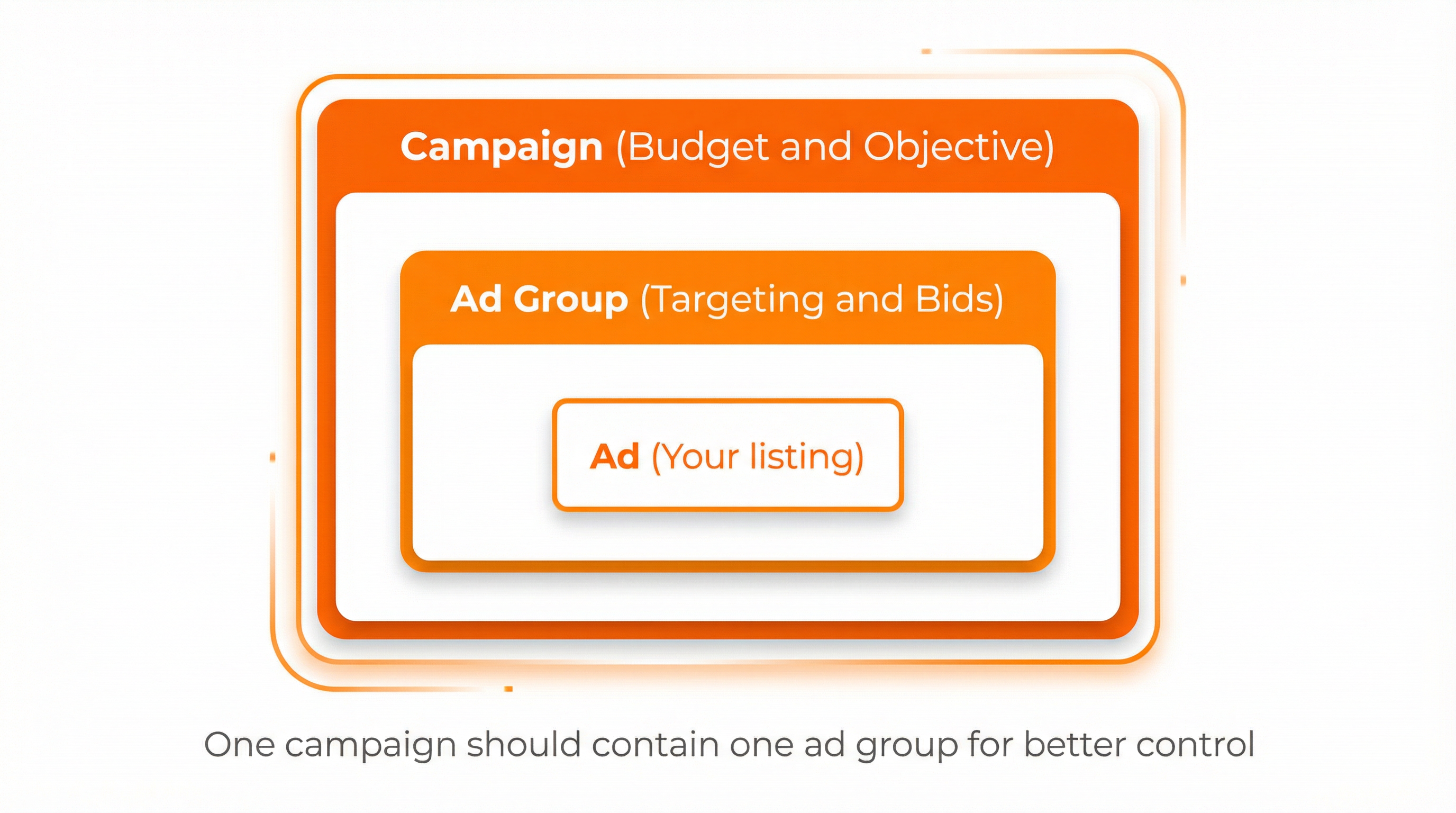
The clean structure that stays profitable and easy to manage is simple: one campaign, one ad group, one ad.
Why one ad group per campaign
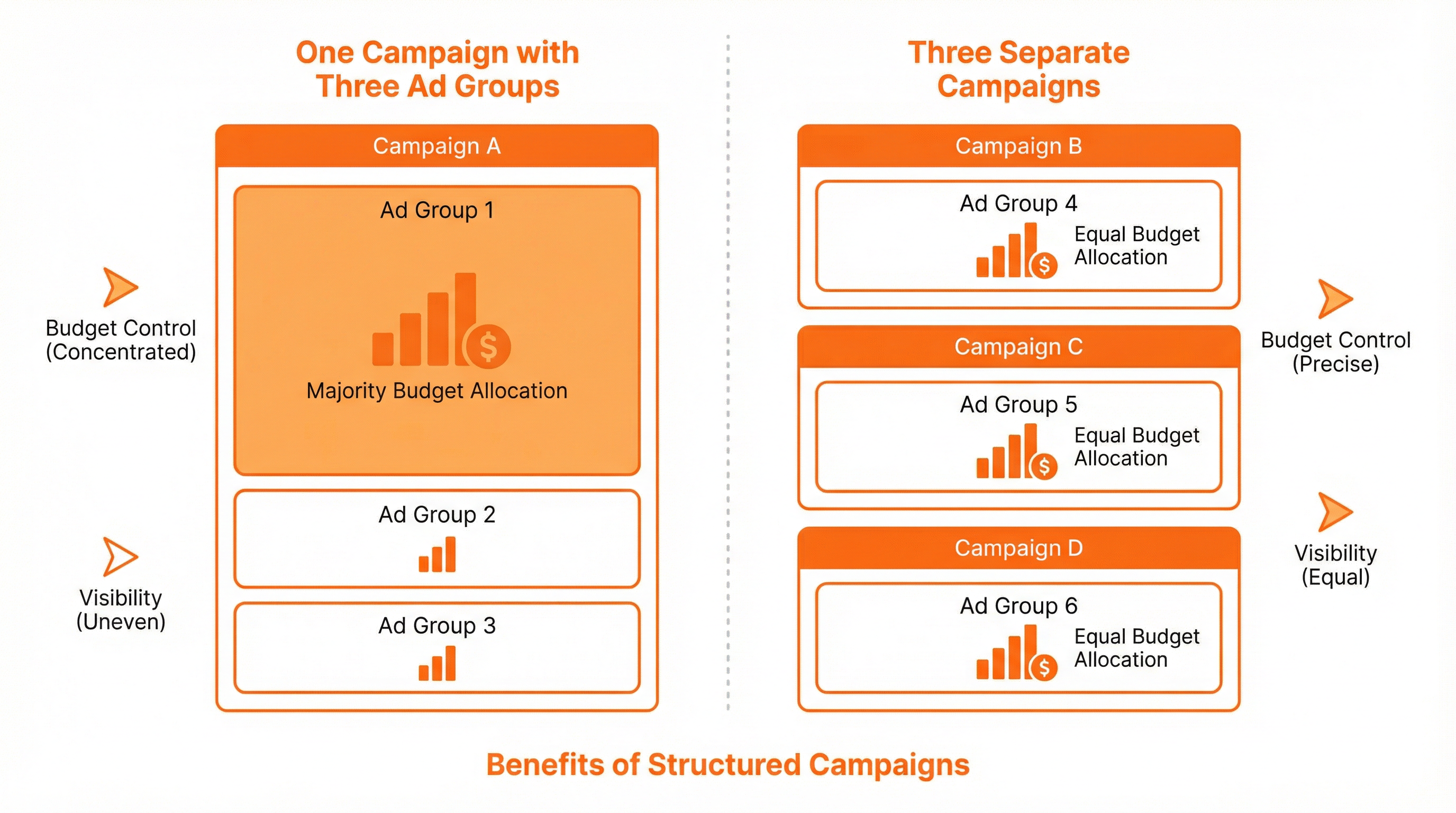
- You avoid budget cannibalization by ensuring one aggressive ad group doesn't consume all the spend and block other targets.
- You gain clearer reporting because each campaign has a single purpose and a single target set.
- You get better control over bids and the daily budget for each targeting theme.
Steps
- Create one campaign for one targeting theme. Example themes: exact keywords, broad discovery, product targeting, defensive brand terms.
- Use one ad group inside that campaign. Keep the target list aligned to the theme.
- Attach one ad. For Sponsored Products, the ad is your listing.
- Repeat by cloning the structure. If you think you need three ad groups, you usually need three campaigns.
Common mistake
One campaign with many ad groups feels organized, but it often hides performance and creates a budget imbalance. Break it out for control.
Choose the Right PPC Goal
Before you touch bids or ACoS targets, decide what PPC is supposed to do for your business right now. The same campaign can look good or bad depending on the goal.
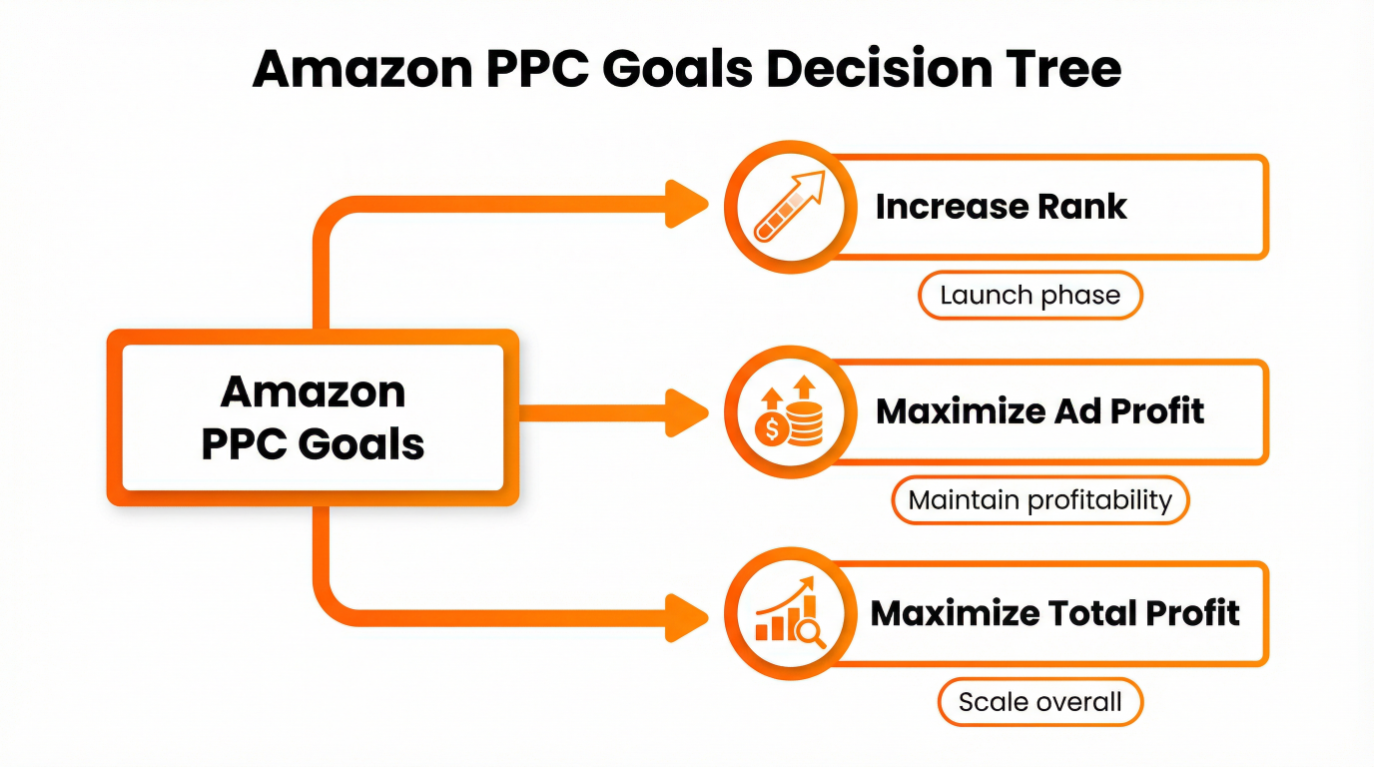
Three practical PPC goals
- Increase rank and visibility: Often used in launches, when you accept a higher ACoS to gain sales velocity and reviews.
- Maximize advertising profit: You want low ACoS and profitable ad-driven sales, even if growth is slower.
- Maximize total profit: You optimize for total business profit, even if ACoS rises, as long as total profit increases.
Quick exercise
Review the last 3 to 12 months of your PPC spend, ACoS, and total profit. Identify which months produced the highest total profit and what your ACoS looked like during those months.
Selecting the Right Starting Bid
Your starting bid is just a baseline. Bids move with seasonality, competition, and performance, so your job is to start reasonably and then optimize consistently.
A simple way to choose a starting bid
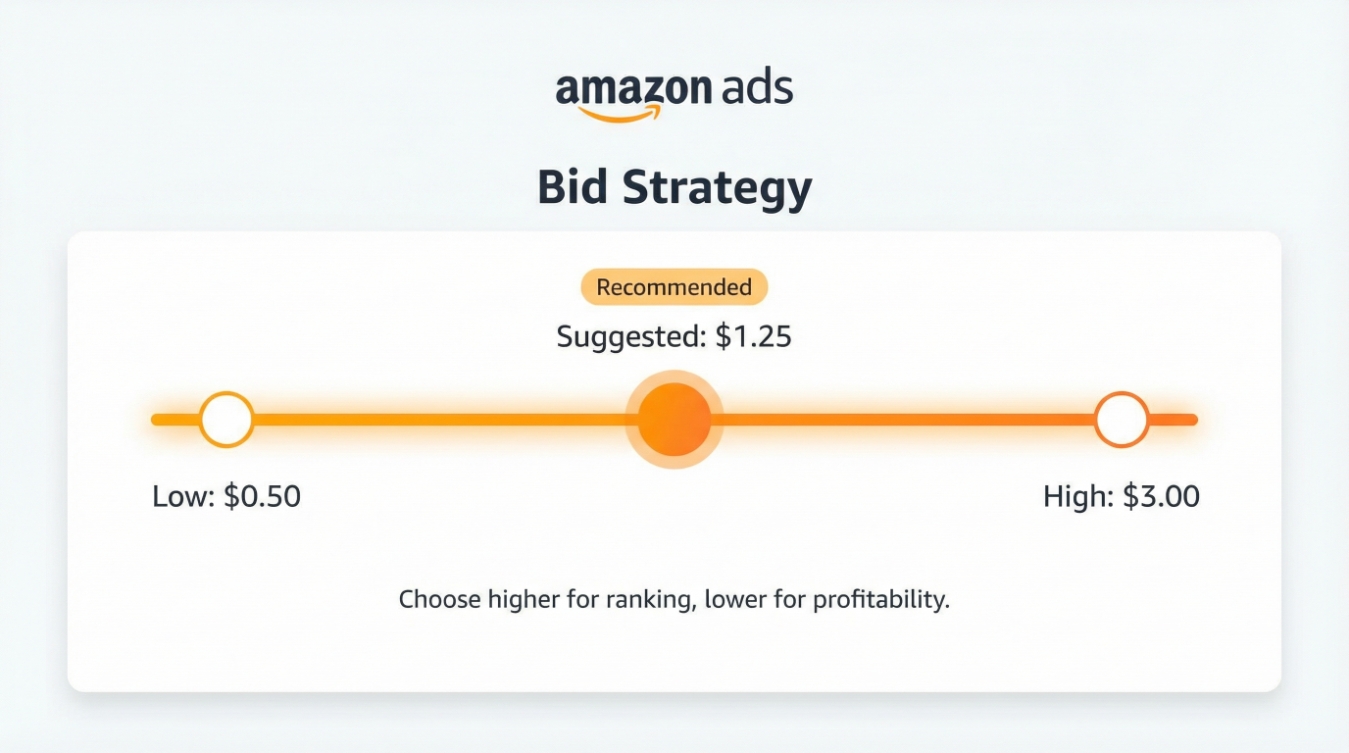
- Decide how aggressive you want to be. If your goal is rank growth, you can start higher. If your goal is profit first, start lower.
- Use Amazon's suggested bid ranges. Amazon typically shows a low, middle, and high range based on marketplace dynamics.
- Start conservatively if you want clean data. A practical conservative baseline is often $0.25 to $0.50 per click, then increases gradually if impressions are too low.
- Adjust weekly. Scale up bids on targets that convert, and scale down bids on targets that waste spend.
Tip
If you start low and get very few impressions, increase your bids by about 20% each week until you reach a healthy flow of clicks and conversions.
How SellerSprite helps
Use SellerSprite Seller Tools like Keyword Research, Keyword Mining, and Reverse ASIN to build better keyword lists before you spend. Better targeting lowers wasted clicks and makes bid decisions easier.
Portfolios: Keep Campaigns Organized
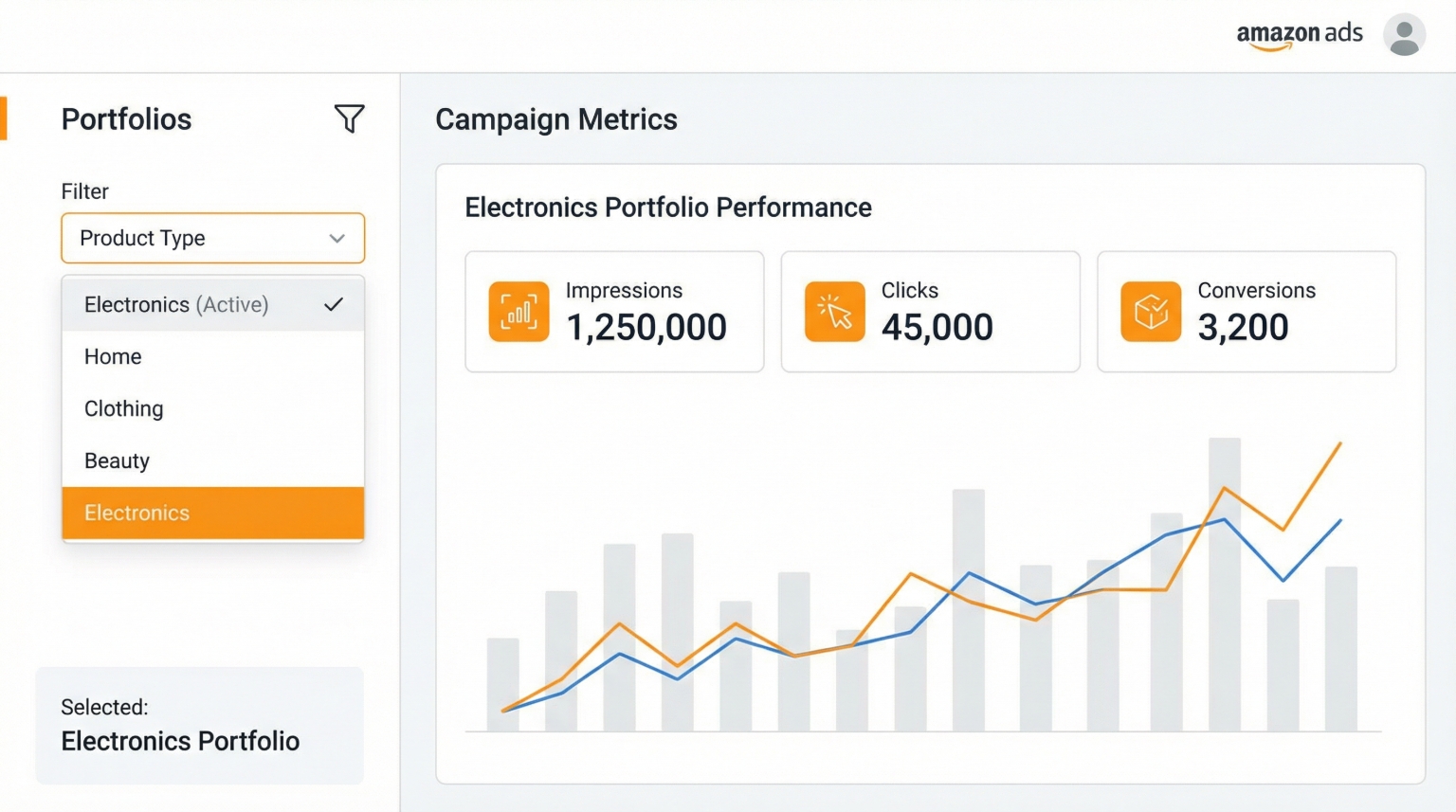
A portfolio is a simple folder that groups campaigns. If you sell multiple products, portfolios help you see performance per product line without manual filtering.
Best practice portfolio setup
- Create one portfolio per product type, not per variation.
- Name it clearly, for example, Garlic Press, Spoon, Spatula.
- Add all campaigns for that product type into the matching portfolio.
Steps
- Create a portfolio. In Campaign Manager, choose Create portfolio.
- Name it by product type. Keep names short and consistent.
- Add existing campaigns. Select all campaigns that advertise that product type.
- Repeat for each product type. Your reporting will become dramatically easier.
Reminder
If you only sell one product, you may not need portfolios yet. If you sell multiple products, portfolios are among the highest-leverage organizational upgrades you can make.
Comparison and Selection
Use this table to choose your PPC approach based on your current goal.
| Goal | Bid posture | What success looks like | Best timing |
|---|---|---|---|
| Increase rank and visibility | Medium to high | More sales velocity, better rank, more review opportunities | Launch or relaunch |
| Maximize advertising profit | Low to medium | Lower ACoS, stable profitable conversions | Steady state |
| Maximize total profit | Medium | Total profit increases even if ACoS rises | Scale phase |
Recommendation: If you are unsure, set total profit as the long-term goal, then adjust short-term goals during the launch phase.
Examples and Templates
Example 1: Campaign naming convention
Copy and paste the naming template
[Product] | [Match Type or Targeting] | [Theme] | [Goal]
Garlic Press | Exact | High Intent Keywords | Profit
Garlic Press | Product Targeting | Competitor ASINs | Rank
Example 2: Portfolio naming convention
- Portfolio: Garlic Press
- Portfolio: Spoon
- Portfolio: Spatula
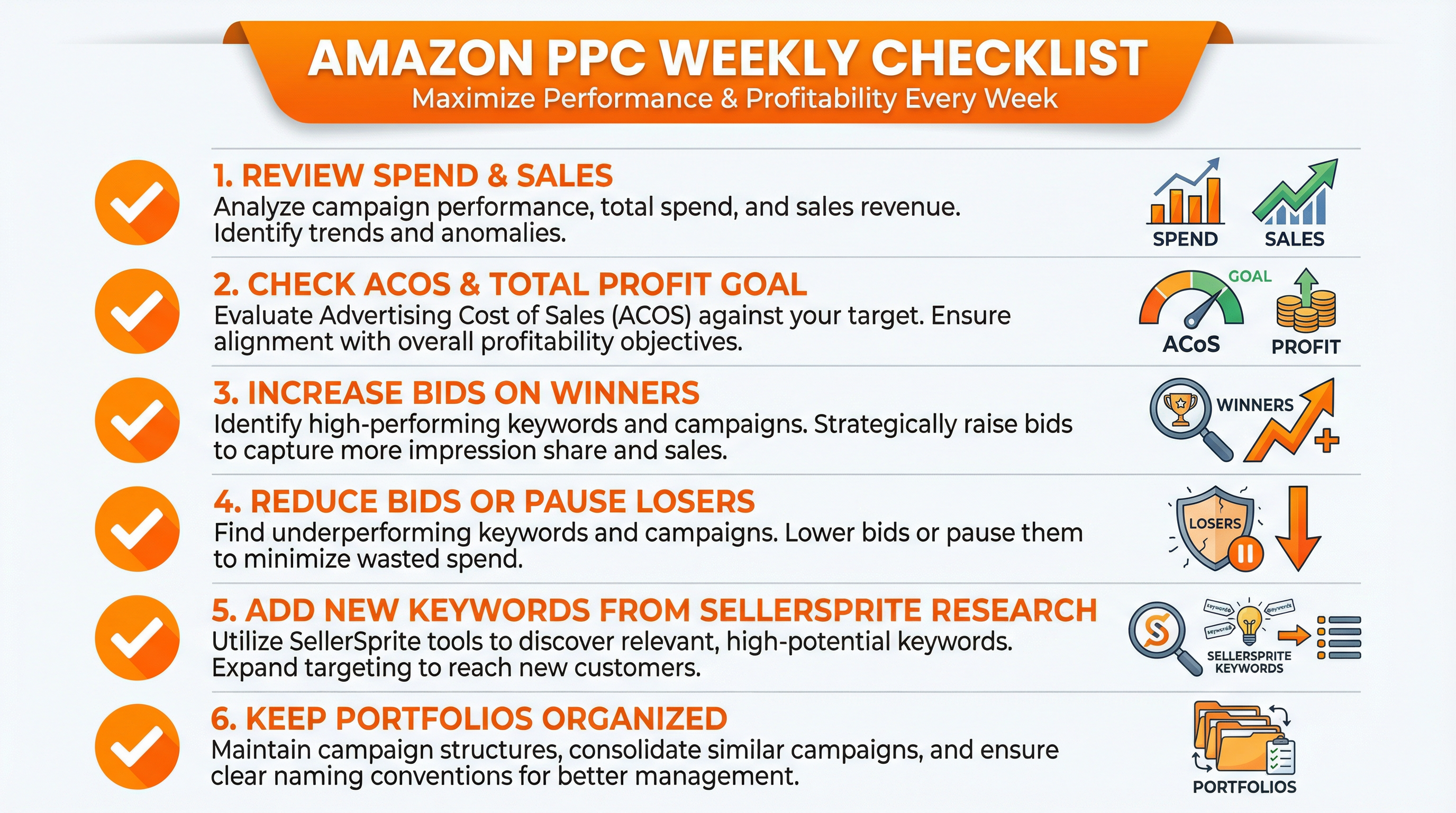
Example 3: Weekly PPC routine
FAQs
Q1: Why not use multiple ad groups in one campaign?
A: Multiple ad groups often compete for the same daily budget, and the most aggressive group can block the rest from learning and converting.
Q2: What should my starting bid be?
A: Use the Amazon suggested bid range as a baseline. A conservative start is often $0.25 to $0.50, then increases gradually if impressions are too low.
Q3: How often should I adjust bids?
A: Weekly is a strong cadence for most sellers. Monthly can be too slow when competition shifts quickly.
Q4: Do I need a portfolio if I have only one product?
A: Not necessarily. Portfolios become more valuable when you have multiple products and need fast reporting per product type.
Q5: How do SellerSprite tools fit into PPC?
A: SellerSprite Seller Tools help you research keywords and competitor positioning so your PPC targeting starts smarter, which reduces wasted spend and improves learning speed.
Summary and Next Steps
The right PPC setup is not complicated. It is disciplined. One campaign per ad group, a clear goal, a reasonable starting bid, and an organization that scales.
Keep your structure clean, optimize weekly, and let your data guide you. Small improvements compound fast in PPC.
Next step action checklist
- Restructure campaigns so each campaign has one ad group and one clear theme.
- Write down your PPC goal for the next 30 days, and align your bids to it.
- Create portfolios for each product type and move campaigns into the right folder.
- Use SellerSprite Seller Tools to improve keyword and competitor targeting before you spend more.
Share Your Sourcing Journey With SellerSprite Community
Join the SellerSprite community on the Facebook Group to share your sourcing journey, ask questions, and get support from fellow Amazon sellers.
View The SellerSprite Course Directory
Ready for the next step? Open the SellerSprite Academy course directory to continue building your Amazon FBA skills chapter by chapter.
About the author
SellerSprite Team publishes practical, step-by-step playbooks for Amazon sellers, combining platform workflows, SellerSprite Seller Tools, and execution focused templates so you can scale with fewer mistakes.